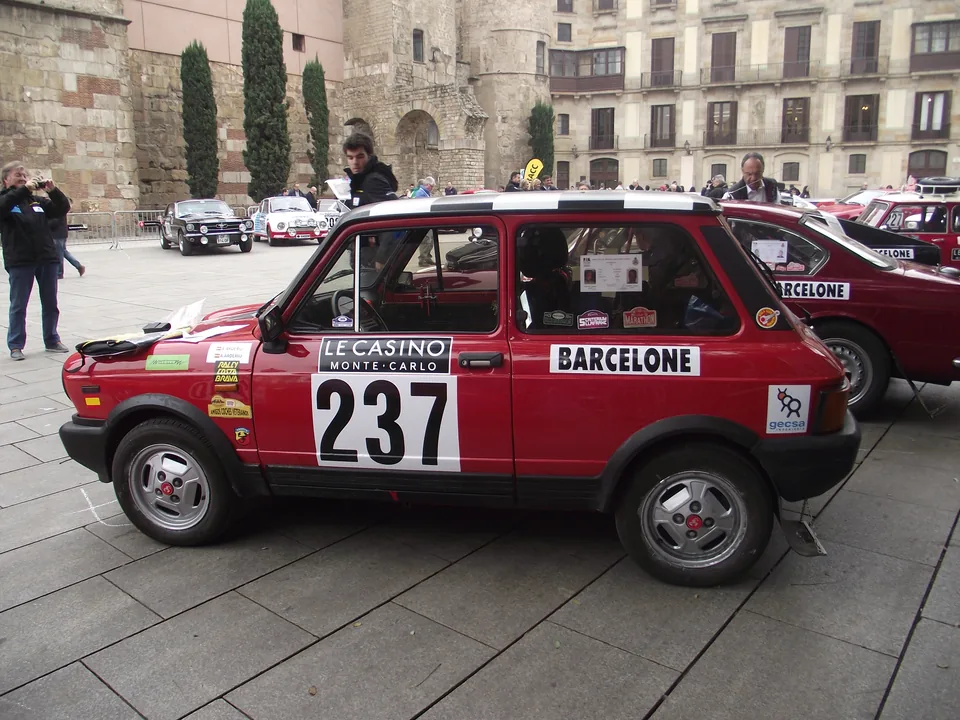
Autobianchi A112 Abarth
Why 8.0: Front-engine, front-wheel drive and transverse — unlike every other Abarth on this shelf — the A112 Abarth previewed the entire hot-hatch template a few years before the Golf GTI got credit for inventing it. Fiat built around 121,000 of them across 14 years, they're still genuinely affordable, and the ownership culture has always been about using them up, not storing them.
Layout
Natural habitat
Ride comfort
Sound
A 1050cc pushrod four with a raspy Abarth exhaust in a car light enough that you hear everything it does. But this is the road version rather than the racer — 70 hp and a plain overhead-valve head mean it buzzes hard without ever sounding quick.
4-cylinder · naturally aspirated · 6,900 rpm redline · rated 5.7 / 10 for engine sound
Market value
Median asking price, good condition · €2k (1975) → €18k (2026), trending up · illustrative data
Child seats · ISOFIX
Built before ISOFIX existed, so there are no anchor points at all. A child seat here is a seatbelt installation, and the belt geometry of the period was not designed with one in mind.
Derived from production years and seating layout, not a per-car source. ISOFIX was standardised as ISO 13216 in 1997, required on new EU model types from 2011 and on all new EU cars from 2014.
The long version
Every other Abarth on this page is rear-engined, because that's how Fiat built the 500 and 600 platforms Carlo Abarth had to work with. The A112 broke that pattern: Autobianchi's own supermini used a transverse front engine driving the front wheels, the layout the entire hot-hatch genre would eventually standardize on, and Abarth's version — bigger carburetors, a hotter cam, eventually 70 hp from 1,050cc at 6,600 rpm for a weight of just 700 kg — arrived in 1971, three years before the Golf GTI that usually gets credit for starting the category. Fiat kept building it for fourteen years, through 1985, and roughly 121,000 of the total A112 run left the factory wearing the Abarth badge — a tenth of total production, but still a genuinely large number next to the low-thousands runs everything else on this shelf saw. That volume kept it cheap for decades, and cheap kept it driven: generations of young Italian owners learned to drive fast, sideways, and occasionally into a hedge in an A112 Abarth, and the car's whole reputation was built on being used up rather than preserved. Prices have firmed as the wider classic-hot-hatch market has discovered it — the best examples now clear $25,000 — but that's still remarkably little for a genuine ownership-and-driving culture with fifty years of history behind it, and most survivors are still being driven, not garaged.