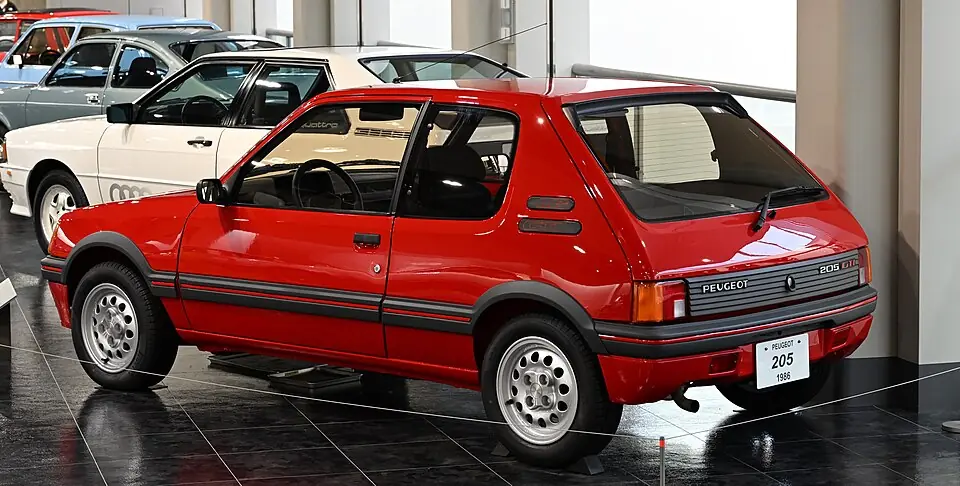
Peugeot 205 GTI
Why 5.3: The reference hot hatch — 880 kg, telepathic, famously spiteful on lift. Collector money arrived in the last decade; the ones outside collections still get driven properly.
Layout
Natural habitat
Ride comfort
Sound
The XU9JA is all induction — a raspy thrumming four that gets genuinely urgent by 6,000 rpm in a car with no sound deadening to speak of. But 1.9 litres and 6,800 rpm limit it to noise rather than note. Charming, and clearly below the naturally aspirated screamers.
4-cylinder · naturally aspirated · 6,800 rpm redline · rated 5.8 / 10 for engine sound
Market value
Median asking price, good condition · €4k (2000) → €28k (2026), trending up · illustrative data
Child seats · ISOFIX
Built before ISOFIX existed, so there are no anchor points at all. A child seat here is a seatbelt installation, and the belt geometry of the period was not designed with one in mind.
Derived from production years and seating layout, not a per-car source. ISOFIX was standardised as ISO 13216 in 1997, required on new EU model types from 2011 and on all new EU cars from 2014.
The long version
Never sold new in the US, so the American ownership story is entirely import-driven — 25-year-rule buyers bringing over clean European examples and immediately learning to respect the lift-off oversteer reputation that made this car famous and occasionally dangerous. In Europe, where it never needed importing, the split is starker: collector-grade cars have gone to garages as the reference hot hatch's canonization set in over the last decade, while scruffier examples are still driven the way Peugeot intended, badly and with commitment. Either way, 880 kg and no electronic safety net means the driving experience hasn't been sanitized by the money, just priced higher.