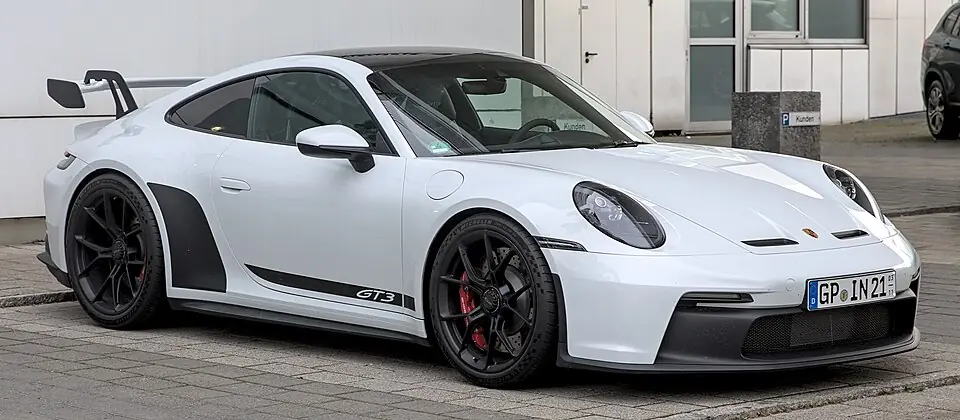
Porsche 911 GT3 (992)
Why 4.8: Mechanically identical to the Touring — same 9,000 rpm flat-six, same chassis — with the wing left on for the track days and the parking-lot recognition the Touring buyer skips. Allocation premiums are still running well over sticker three years on.
Layout
Natural habitat
Ride comfort
Sound
A 4.0 flat-six to 9,000 rpm with no turbos in the way — the last mainstream engine of its kind, and Porsche knows it. Held just off the exotics because a flat-six is more mechanical hard-edged intensity than melody.
6-cylinder · naturally aspirated · 9,000 rpm redline · rated 9.0 / 10 for engine sound
Market value
Median asking price, good condition · €149k (2021) → €237k (2026), trending up · illustrative data
Child seats · ISOFIX
The base, winged GT3 has never offered a rear seat at any point in the 992's run. That's stayed a Touring-only option, and only since the 992.2 facelift — there's no rear anchor to speak of here.
The 992-wide front-passenger option applies — ISOFIX bracket and airbag key switch — as long as the standard sport seats are kept over the optional full buckets.
Porsche 911 GT3 (992) configurator; evo.co.uk/Rennlist reporting on GT3 vs. GT3 Touring rear-seat availability
The long version
Order the winged GT3 instead of the Touring and you're buying the version built to be seen doing what it's built for, wing included, and the ownership data tracks that choice: a bigger share of these end up at track days than Touring cars do, and a bigger share also end up flipped, because a visible GT3 badge still moves at a premium years after launch. Dealers were adding six-figure markups at the height of the 2022 frenzy; today's premium has settled but not disappeared, averaging well over sticker. The engine underneath doesn't care which body it's wearing — the market clearly does.