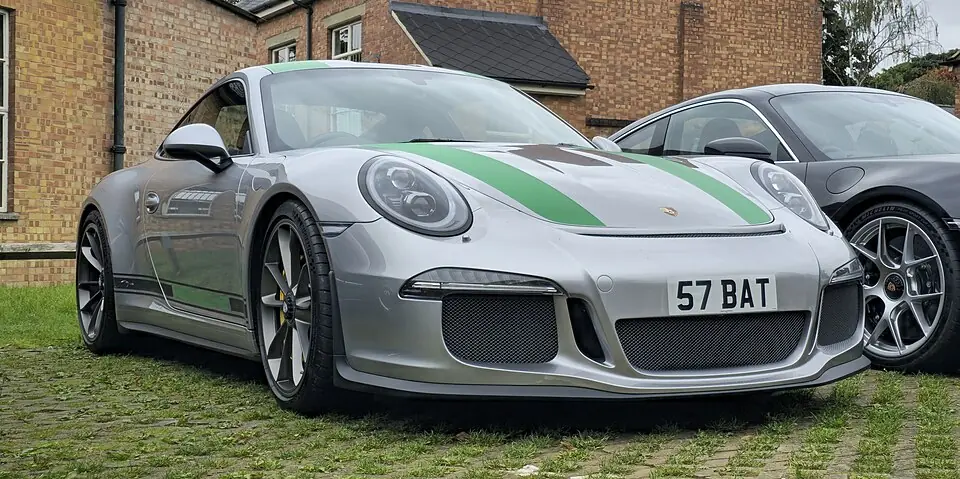
Porsche 911 R
Why 2.5: The GT3 RS drivetrain in a lighter, wingless, manual-only body — Porsche's purest analog argument in the modern 911 range. 991 cars built, five and six-figure flips within days of delivery, and current auction results still running roughly four times over sticker.
Layout
Natural habitat
Ride comfort
Sound
The 4.0 flat-six from the GT3 RS, with a lightweight exhaust and much of the insulation deleted, so nothing sits between the engine and the cabin. It is a hair below the 992 GT3 because that car's exhaust was tuned harder still. Among the best flat-sixes made.
6-cylinder · naturally aspirated · 9,000 rpm redline · rated 8.9 / 10 for engine sound
Market value
Median asking price, good condition · €170k (2016) → €718k (2026), trending up · illustrative data
Child seats · ISOFIX
There aren't any — strict two-seater.
Built on the 991.2 GT3 RS shell, the 911 R carries the same front-passenger option — ISOFIX bracket plus airbag key switch — usable if ordered with adjustable sport seats rather than the fixed buckets most cars left the factory with.
A 2016 US recall on the 911 R was specifically about clarifying the owner's-manual child-seat instructions, confirming the provision existed.
NHTSA recall 19V-875 (2016 911 R); 991-era Porsche child-seat documentation (owner-community sourced, not manufacturer documentation)
The long version
Porsche built exactly 991 of these, and buyers who actually wanted to drive a manual-only, wingless GT3 RS got outbid before the paperwork was signed — flip listings appeared within days of the first deliveries, some at double sticker before an owner had put a mile on the clock. That immediate speculative frenzy set the tone for a decade: recent auction results in the $750,000–$800,000 range, roughly four times the original MSRP, keep the surviving population firmly in climate-controlled storage. The engineering underneath is arguably the most analog thing Porsche has built this century; almost nobody buying one today is finding that out themselves.