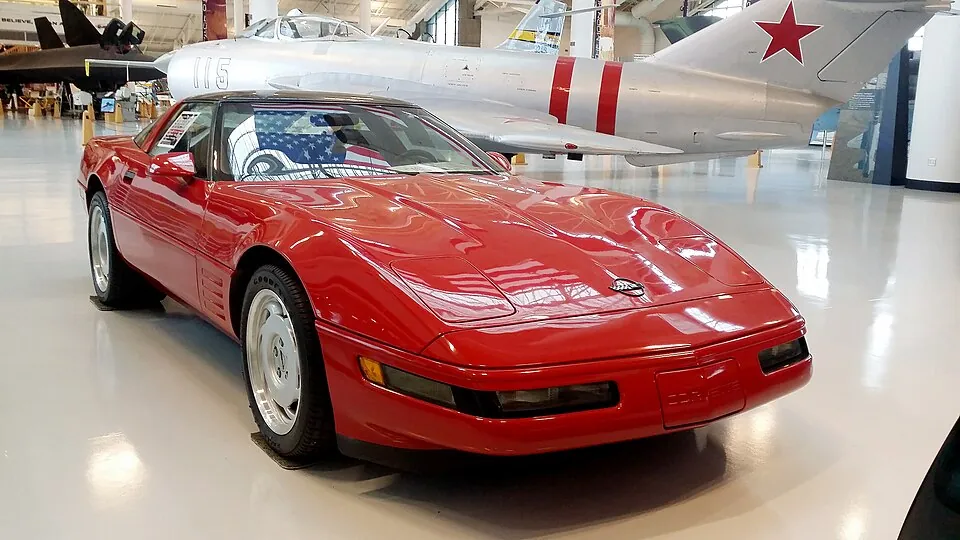
Chevrolet Corvette ZR-1 (C4)
Why 5.0: A Lotus-engineered, 32-valve small-block built by an outboard-motor company, in a Corvette body most people mistook for a base car. Complexity and low production numbers now keep a lot of survivors in collections instead of at track days.
Layout
Natural habitat
Ride comfort
Sound
The Lotus-designed LT5 is a quad-cam 32-valve V8 that revs to 7,200 and opens a second set of intake runners on the way, giving a smooth mechanical wail no pushrod Corvette makes. It is capped by a restrained factory exhaust. Distinctive, and quiet about it.
8-cylinder · naturally aspirated · 7,200 rpm redline · rated 7.7 / 10 for engine sound
Market value
Median asking price, good condition · €28k (1995) → €44k (2026), trending up · illustrative data
Child seats · ISOFIX
Built before ISOFIX existed, so there are no anchor points at all. A child seat here is a seatbelt installation in the only passenger seat there is.
Derived from production years and seating layout, not a per-car source. ISOFIX was standardised as ISO 13216 in 1997, required on new EU model types from 2011 and on all new EU cars from 2014.
The long version
General Motors farmed the engine out to Lotus and had Mercury Marine build it, an odd pairing that produced a genuinely European-grade DOHC V8 wearing a shape almost nobody on the street could tell apart from a base Corvette, which was half the appeal at the time. Only a few thousand were built, and the LT5's complexity means keeping one running properly now takes a specialist, not a corner-store mechanic, nudging a good share of the survivors toward careful ownership rather than daily abuse. The manual-only, six-speed cars that do still see track days are usually driven by people who know exactly what they are protecting.