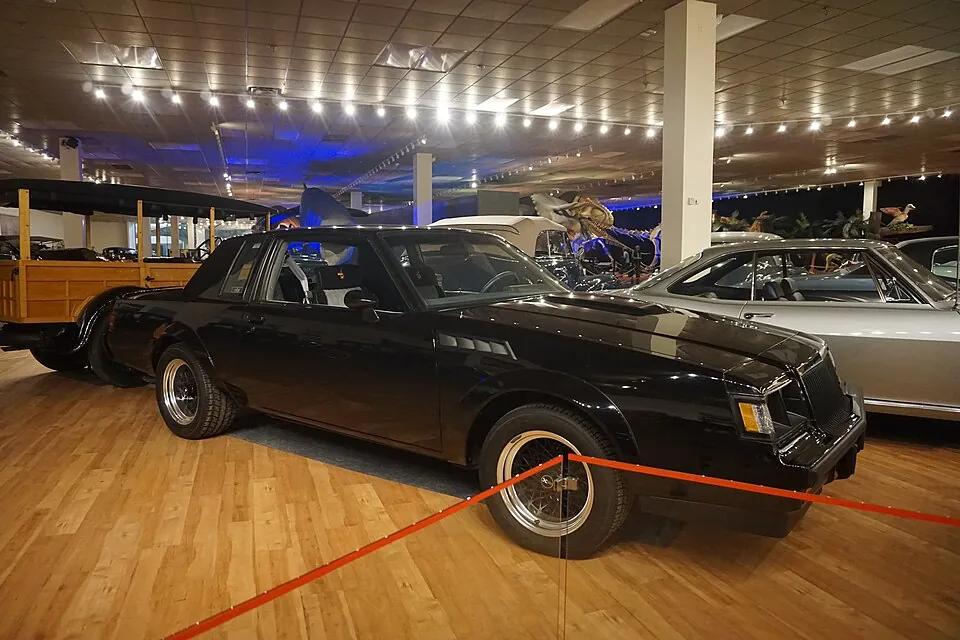
Buick GNX
Why 3.0: 547 built, a Garrett-turbocharged 3.8 quicker than the Ferrari and Corvette of its year, and no manual gearbox ever offered. Most were parked the day they were delivered — a genuine drag-strip terror bought as an instant collectible.
Layout
Natural habitat
Ride comfort
Sound
The 3.8 turbo V6 has a lopey, uneven idle with a clear turbo and wastegate whistle over it, which is much of why the car has its reputation. But it stops at 4,500 rpm and the exhaust is soft. Character at a standstill, very little of it once moving.
6-cylinder · turbocharged · 4,500 rpm redline · rated 5.6 / 10 for engine sound
Market value
Median asking price, good condition · €23k (1990) → €152k (2026), trending up · illustrative data
Child seats · ISOFIX
Built before ISOFIX existed, so there are no anchor points at all. A child seat here is a seatbelt installation, and the belt geometry of the period was not designed with one in mind.
Derived from production years and seating layout, not a per-car source. ISOFIX was standardised as ISO 13216 in 1997, required on new EU model types from 2011 and on all new EU cars from 2014.
The long version
Buick built exactly 547 of these, and dealers marked most of them up the moment word got out that a turbocharged mid-size sedan had just out-dragged a contemporary Ferrari, which meant a meaningful share sold to buyers who understood the collector math before they understood the car. Low-mile, documented survivors now trade for many multiples of the original sticker, and a fair number never really left their first owner's garage. The quarter-mile numbers were never in question, and the small handful still getting run at the strip prove the Grand National recipe still works; the rest are parked, appreciating, exactly as planned from day one.