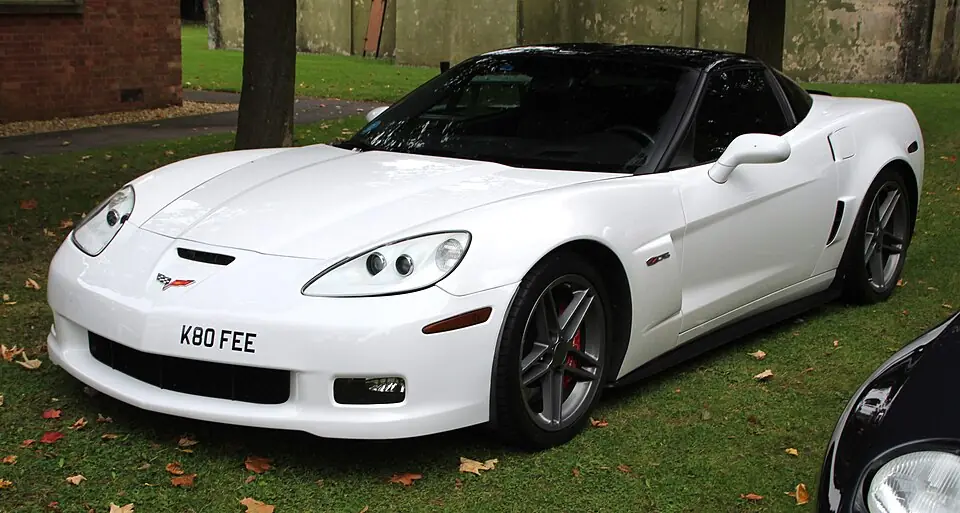
Corvette Z06 (C6)
Why 7.3: The LS7's dry-sump 7.0-liter V8 revs to 7,000 rpm with nothing but throttle and eight cylinders between the driver and the redline, in a body built specifically to be light rather than comfortable. Corner-load oil starvation on track is a well-known Achilles heel, proof this was built to be driven hard, not admired.
Layout
Natural habitat
Ride comfort
Sound
Seven litres of naturally aspirated pushrod V8 with titanium rods and a 7,000 rpm limit, a thousand more than a big American V8 usually gets. It is a cross-plane bellow with no melody in it, so it edges the AMG 6.2 on revs rather than on refinement.
8-cylinder · naturally aspirated · 7,000 rpm redline · rated 7.9 / 10 for engine sound
Market value
Median asking price, good condition · €61k (2006) → €53k (2026), trending down · illustrative data
Child seats · ISOFIX
There aren't any — strict two-seater.
No rear seat and no LATCH hardware up front either — GM's manual says so directly. The documented fix is a seatbelt-only install, with the passenger sensing system standing in for the old on-off switch.
Manual is explicit that rear-facing restraints are never allowed in that seat, sensing system or not.
2009 Chevrolet Corvette Owner's Manual (GM)
The long version
GM built the C6 Z06 around a target weight more than a target price, stripping sound deadening and fitting a magnesium engine cradle to keep the 7.0-liter LS7 as light as the spec sheet demanded, a package that reads like a track car with license plates. That focus came with a real cost: the dry-sump oiling system was famously unforgiving of sustained high-g cornering, and a generation of owners learned to respect the oil temperature gauge the hard way. Values slid through the used-car glut of the 2010s, then started firming again as buyers rediscovered how rare an unassisted, naturally aspirated manual coupe like this has become.