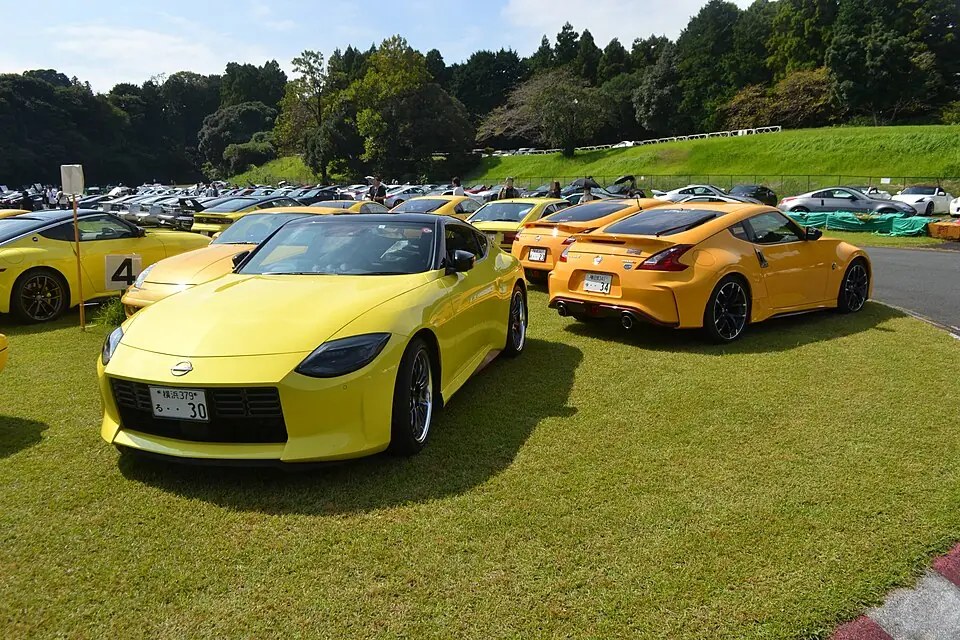
Nissan Z (RZ34)
Why 7.0: A parts-bin love letter — old platform, new twin-turbo, a manual as standard. Bought by people who wanted exactly this, and driven accordingly.
Layout
Natural habitat
Ride comfort
Sound
The VR30DDTT has a low gruff V6 rumble and the RZ34's exhaust is less strangled than the Q60's was. But 6,800 rpm, two turbos and an active sound layer leave it flat where the old naturally aspirated VQ was vocal. Honest mission, forgettable soundtrack.
6-cylinder · turbocharged · 6,800 rpm redline · rated 4.7 / 10 for engine sound
Market value
Median asking price, good condition · €41k (2023) → €34k (2026), trending down · illustrative data
Child seats · ISOFIX
There aren't any — strict two-seater.
No lower LATCH anchors up front. Owner reports describe a single tether anchor point in the cargo area behind the seats, used to belt-install a forward-facing restraint in the passenger seat.
Owners describe the occupant-classification sensor toggling the airbag on and off when a wide booster spreads the seat bolsters — automatic weight sensing, not a manual switch. Mirrors the documented 370Z setup on the platform it succeeds.
Nissan Z (RZ34) owners forum (nissanzclub.com) (owner-community sourced, not manufacturer documentation)
The long version
The buyer here already knew what a 370Z or 350Z felt like and wanted more power without losing the manual, a narrower and more committed audience than 'wants a sports car.' It shows in the take-rate assumption baked into the spec sheet — a stick shift as standard, not an option protecting margins — and in a resale curve that depreciates like a normal enthusiast car rather than getting hoarded. Cross-shopped constantly against the Supra, the Z wins buyers who specifically wanted three pedals, and those buyers use the car the way that choice implies.