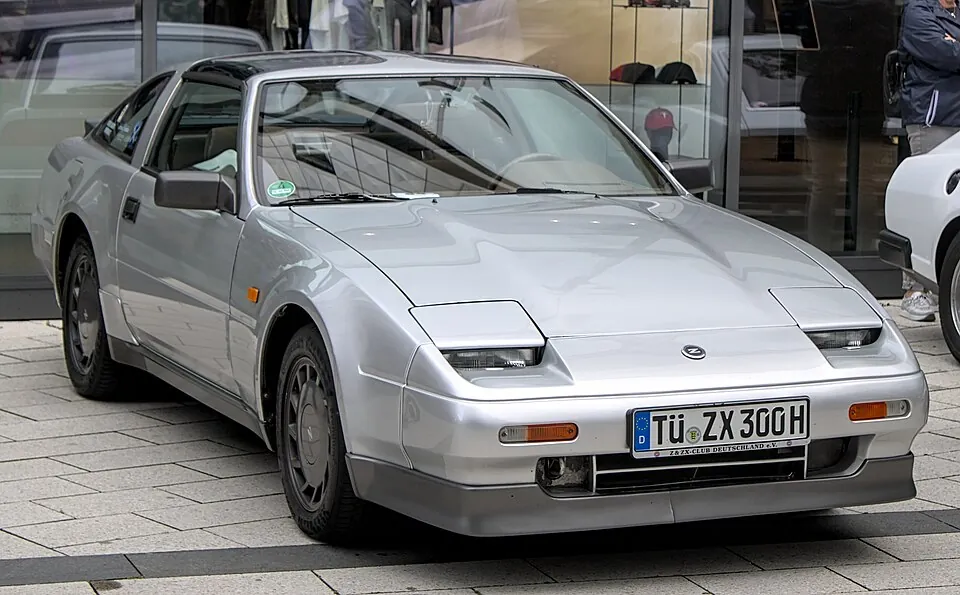
Nissan 300ZX (Z31)
Why 7.2: The first Z without a straight-six, and the one Z purists spent thirty years apologising for. It is also the best-selling generation of the entire lineage — the VG30ET turbo made 200 hp when a Porsche 944 made 150, and America bought them by the hundred thousand. Cheap for decades, so most were used until they rusted or the T-tops leaked.
Layout
Natural habitat
Ride comfort
Sound
The SOHC VG30ET makes a soft low woofle and a faint turbo whistle, which suits the grand-touring brief it was built for. There is no top end at 6,000 rpm and no induction drama, so it is one of the more forgettable noises in the Japanese section.
6-cylinder · turbocharged · 6,000 rpm redline · rated 4.5 / 10 for engine sound
Market value
Median asking price, good condition · €20k (1987) → €15k (2026), trending down · illustrative data
Child seats · ISOFIX
Built before ISOFIX existed, so there are no anchor points at all. A child seat here is a seatbelt installation, and the belt geometry of the period was not designed with one in mind.
Derived from production years and seating layout, not a per-car source. ISOFIX was standardised as ISO 13216 in 1997, required on new EU model types from 2011 and on all new EU cars from 2014.
The long version
Replacing the L-series straight-six with the VG30 V6 was the decision that defined the Z31, and it was made for entirely rational reasons: the V6 was shorter, lighter at the nose, and the turbocharged version made 200 hp in US trim at a time when almost nothing did. The car around it was a proper eighties grand tourer rather than a sports car — digital dashboards, T-bar roofs, adjustable dampers on later cars, and a 2+2 body that outsold the two-seater. Around 329,000 were built, more than any other Z generation before or since, and the great majority went to North America; the 1987 facelift smoothed the nose and is the version most people picture. Being both plentiful and cheap kept values on the floor into the 2010s, and rust plus neglected turbo plumbing removed most of them. The survivors are now being taken seriously, but from a base so low that a good one is still one of the least expensive ways into eighties Japanese performance — and its owners drive it accordingly.