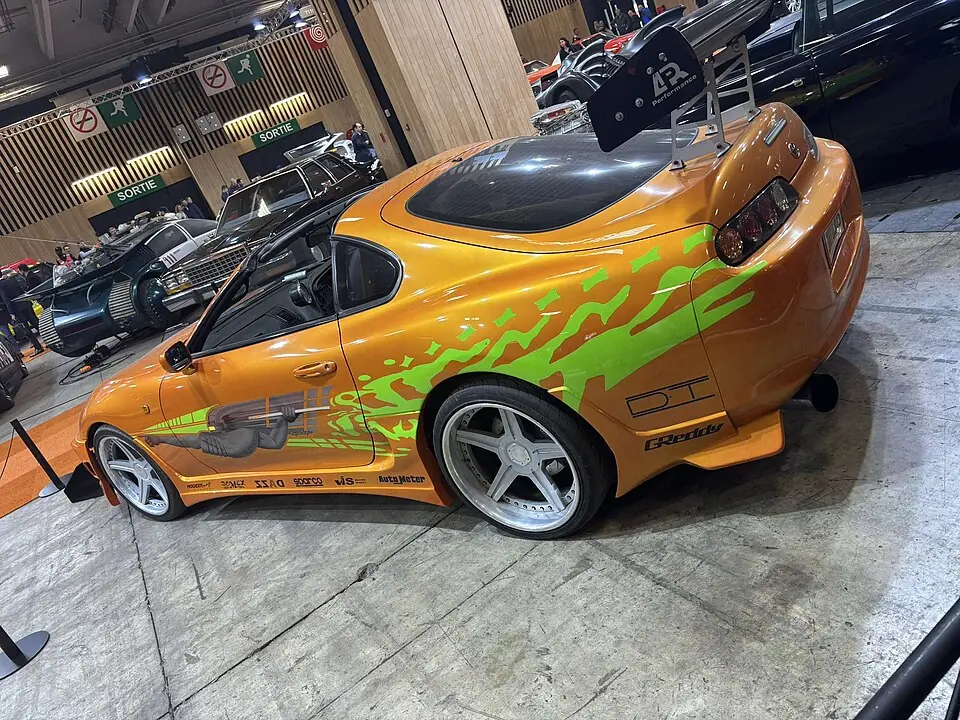
Toyota Supra (A80)
Why 4.3: The 2JZ made it a tuning legend; the auction era made it a safe-queen. Unmodified cars now trade as instruments of nostalgia — mileage collapses the moment one crosses six figures.
Layout
Natural habitat
Ride comfort
Sound
The 2JZ is smooth and unburstable, with the sequential turbos handing over in stages, but refinement was always the point of it. Standard, it is a muted straight-six that only becomes interesting once the exhaust is replaced, and this column rates the car as built.
6-cylinder · turbocharged · 6,800 rpm redline · rated 5.8 / 10 for engine sound
Market value
Median asking price, good condition · €26k (2000) → €166k (2026), trending up · illustrative data
Child seats · ISOFIX
Same story on the 2+2's rear jump seats — seatbelt-only, no ISOFIX brackets of any kind.
Sold new in the US through the late 1990s, but production (including the final JDM-only cars) ended in 2002 — before ISOFIX existed as fitted equipment. The US owner's manual covers only seatbelt-secured child restraints, no lower-anchor hardware.
US and European sales wound down years before JDM-only production continued to 2002, but even those final Japan-market cars predate the ISOFIX standard.
Toyota Supra (A80) US owner's manual child-restraint language; pre-ISOFIX production timeline (1993-2002) (owner-community sourced, not manufacturer documentation)
The long version
There are really two Supra populations now: modified cars still living the tuner-culture life they were built for, and unmodified, low-mile examples that auction houses have taught owners to treat as a retirement account with a turbo. The second group is what is dragging the score down; six-figure sale prices do not happen to cars that get driven to the drag strip on weekends. Values have climbed sixfold since 2000 with most of that in the last decade, a curve steep enough that even owners who intended to drive it start hedging. No badges attach because it is genuinely split down the middle.