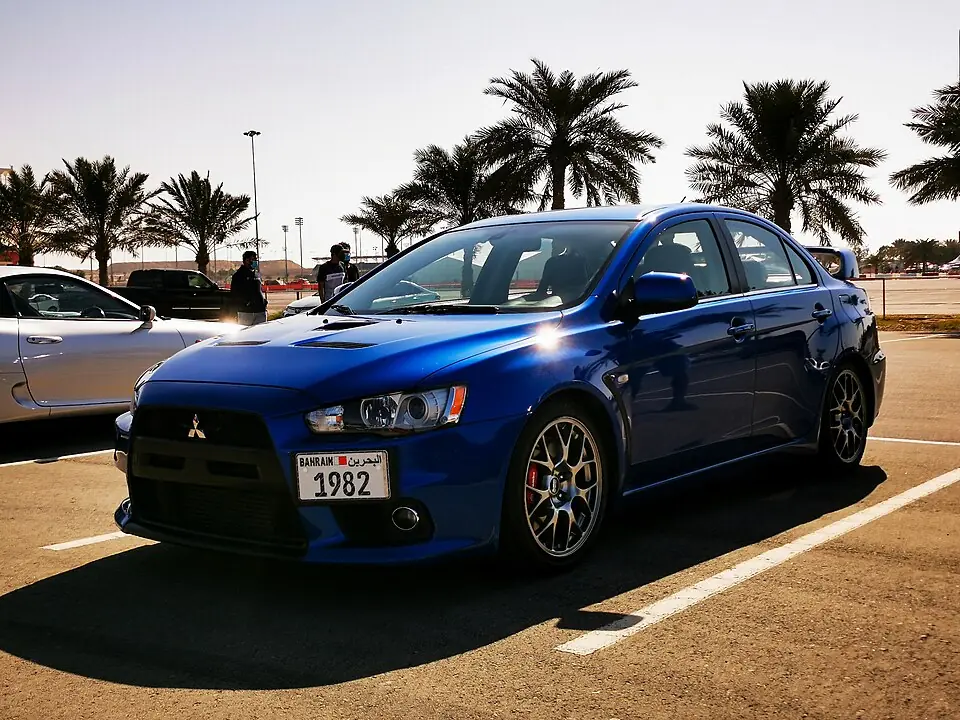
Mitsubishi Lancer Evolution X
Why 5.5: S-AWC's computer-managed torque vectoring turned in sharper than the old AYC system ever did, but period reviewers flagged the switch to electric power steering as a real step down in feel — the weak lens in an otherwise capable AWD sedan. Values collapsed through the 2010s used-market thrash and are only now climbing back on unmolested cars.
Layout
Natural habitat
Ride comfort
Sound
The 4B11T is smoother and quieter than the iron-block 4G63 it replaced, with a flat turbo rasp and driveline whine underneath. It is capped by heavy muffling and a generic four-cylinder tone. Competent, and less characterful than the Evo it followed.
4-cylinder · turbocharged · 7,000 rpm redline · rated 5.1 / 10 for engine sound
Market value
Median asking price, good condition · €30k (2008) → €32k (2026), trending up · illustrative data
Child seats · ISOFIX
Reported as fitted with ISOFIX seat anchor points in the rear on this generation.
No front ISOFIX documented in available sources for this generation's platform.
No Evolution-badge-specific primary source (Euro NCAP tested the contemporaneous Lancer donor car, not the Evo X import); treat with more caution than the manufacturer-sourced entries.
Secondary aggregation citing Euro NCAP's 2009 Mitsubishi Lancer child-occupant assessment (same Galant Fortis-based generation as Evo X) (owner-community sourced, not manufacturer documentation)
The long version
The X inherited the Evo badge just as its buyers aged out of ramen-budget ownership, so the population splits between modified survivors and the rare stock car that is suddenly worth real money. A decade of hard launches and auction-sourced turbos is why unmolested examples now command attention the model never earned new. It still gets driven — Evos always do — but the S-AWC era marks where the badge started filtering the driver out of the loop, and the involvement number says so.