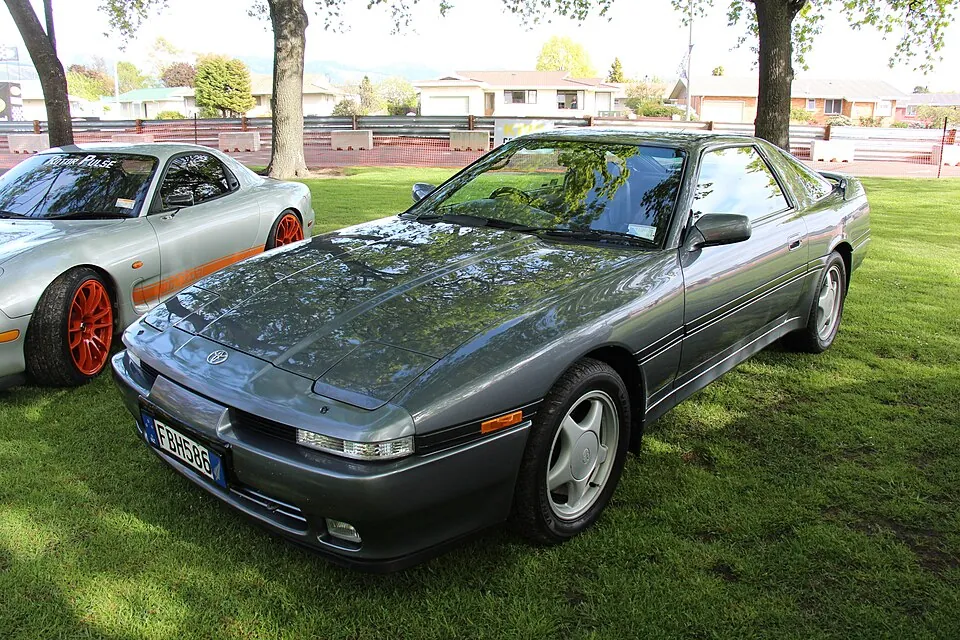
Toyota Supra (A70)
Why 5.3: Toyota's first turbocharged Supra, TEMS adjustable suspension and all, spent a decade as a used-car-lot GT before the A80 stole its spotlight. The 7M-GTE now hunts for the credibility its little brother took for granted.
Layout
Natural habitat
Ride comfort
Sound
The 7M-GTE straight-six has the smooth, even six-cylinder hum you expect and a soft turbo swell behind it. But this was built as a quiet grand tourer — heavily muffled, 6,500 rpm, and without the hard edge the later 2JZ cars found. Pleasant and forgettable.
6-cylinder · turbocharged · 6,500 rpm redline · rated 5.4 / 10 for engine sound
Market value
Median asking price, good condition · €9k (1995) → €29k (2026), trending up · illustrative data
Child seats · ISOFIX
Built before ISOFIX existed, so there are no anchor points at all. A child seat here is a seatbelt installation, and the belt geometry of the period was not designed with one in mind.
Derived from production years and seating layout, not a per-car source. ISOFIX was standardised as ISO 13216 in 1997, required on new EU model types from 2011 and on all new EU cars from 2014.
The long version
This was the Supra before the Supra people actually talk about, a genuinely quick turbocharged GT that spent decades being cross-shopped against Z cars and Mustangs rather than mythologized, and values reflected that ordinary used-car status for a long stretch. The 2JZ generation absorbed almost all the cultural attention Toyota's turbo Supra lineage eventually earned, leaving the A70 to be driven hard by people who wanted the layout and the shape without a six-figure asking price. That gap is only now closing, as buyers priced out of an A80 discover the same double-wishbone chassis and turbo six underneath a cheaper badge.