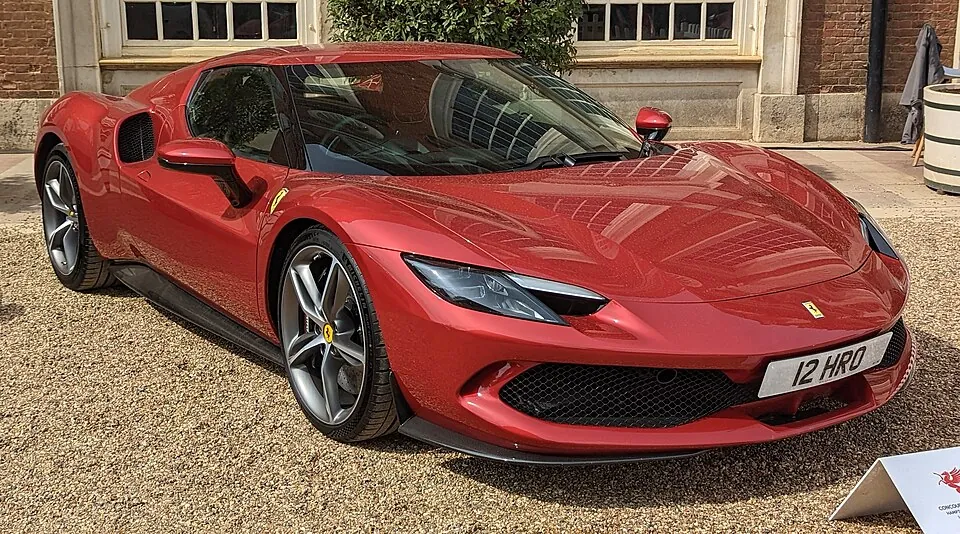
Ferrari 296 GTB
Why 4.3: 654 turbo horsepower plus 122 electric, more than an F8 makes on gas alone, wrapped around a battery pack and brake-by-wire hardware that blunt exactly the feedback the badge promises. Ferrari's first series-production hybrid, and the template for every V8 replacement still to come.
Layout
Natural habitat
Ride comfort
Sound
The 120-degree V6 fires closer to a V12 pattern than a V8, and the hot-tube resonator is a real acoustic path rather than a speaker, so what reaches the cabin is genuine. But it is a small turbocharged six, thin next to the V8 it replaced.
6-cylinder · turbocharged · 8,500 rpm redline · rated 6.8 / 10 for engine sound
Market value
Median asking price, good condition · €296k (2022) → €287k (2026), trending down · illustrative data
Child seats · ISOFIX
There aren't any — strict two-seater.
Ferrari's manuals state the passenger seat isn't set up for universal ISOFIX seats; the only sanctioned front child seat is the brand's belt-mounted, transponder-recognized BabySmart/CPOD unit.
The trap: casual 'child-seat compatible' references mean BabySmart, not ISOFIX hardware.
Ferrari owner's-manual policy (599 GTB Fiorano/488GT text, consistent across the range); 488-era owner reports (PistonHeads) (owner-community sourced, not manufacturer documentation)
The long version
Ferrari built genuinely quick hardware here, launch numbers that embarrass the F8 it effectively replaces, but the V6-plus-battery formula asks buyers to trust a powertrain architecture with none of the marque's V8 or V12 heritage behind it. Early resale has tracked close to sticker on raw demand alone, with no settled verdict yet on whether hybrid Ferraris hold value the way naturally aspirated ones eventually did. The battery pack's story after a decade of charge cycles, and its eventual replacement cost, are still unwritten, and that uncertainty already shapes how these get bought and sold as much as anything under the rear glass.