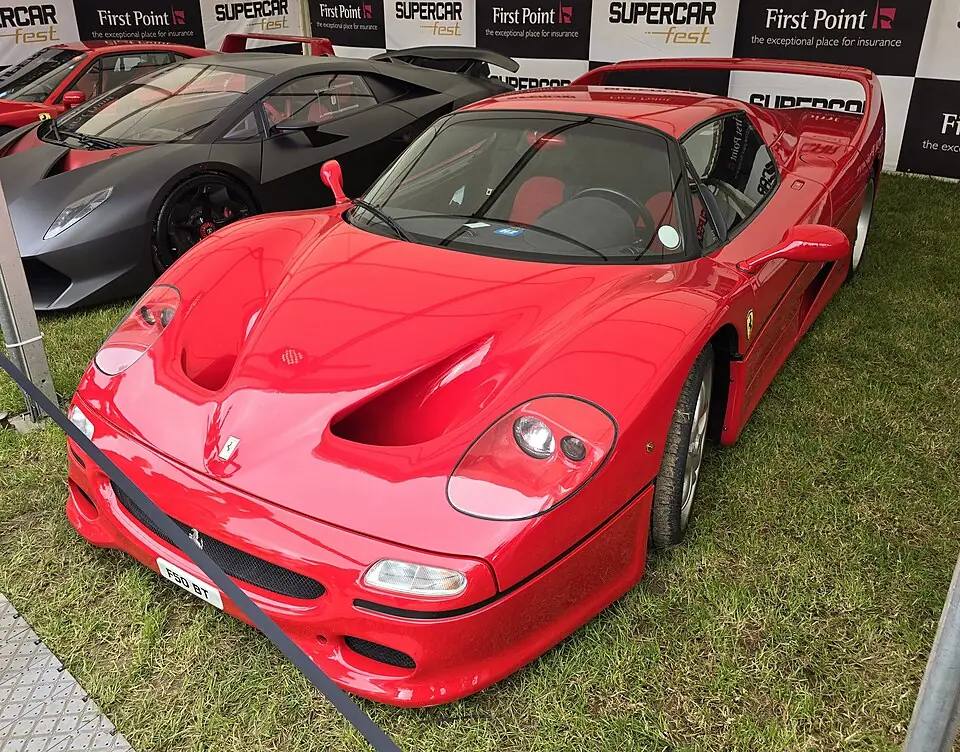
Ferrari F50
Why 2.8: An F1-derived carbon monocoque, a naturally aspirated V12 stressed into the chassis as a load-bearing member, unassisted steering and no ABS softening — Ferrari's most analog road car, full stop. Doug's Weekend score of 44 says the machine deserves to be driven; seven-figure values say almost nobody does.
Layout
Natural habitat
Ride comfort
Sound
The 4.7 V12 descends from the 1990 Formula 1 engine and is bolted rigidly to the tub, so the whole car resonates with it to 8,500 rpm. It gives away a fraction to the Carrera GT only on outright range. Nothing Ferrari has built since sounds this raw.
12-cylinder · naturally aspirated · 8,500 rpm redline · rated 9.7 / 10 for engine sound
Market value
Median asking price, good condition · €276k (2000) → €1.5M (2026), trending up · illustrative data
Child seats · ISOFIX
There aren't any — strict two-seater.
The only position there is — and the weak point of this era. Airbag cut-off switches only became routine in the mid-2000s; many of these cars have none from the factory, which rules out a rear-facing seat entirely unless a dealer-fitted deactivation was installed. Forward-facing on the belt, seat slid fully back, is what the period manuals allow.
Derived from production years and seating layout, not a per-car source. ISOFIX was standardised as ISO 13216 in 1997, required on new EU model types from 2011 and on all new EU cars from 2014.
The long version
Ferrari screened the original buyers and famously leased rather than sold to Americans, setting the tone: this was always a car the factory trusted you to warehouse. For two decades it traded below the F40; the market's rediscovery arrived just in time to end what little driving was happening. The few owners who exercise theirs describe the most Formula-1-adjacent experience Ferrari ever road-registered, which makes the Garage Queen badge it wears this site's clearest tragedy.