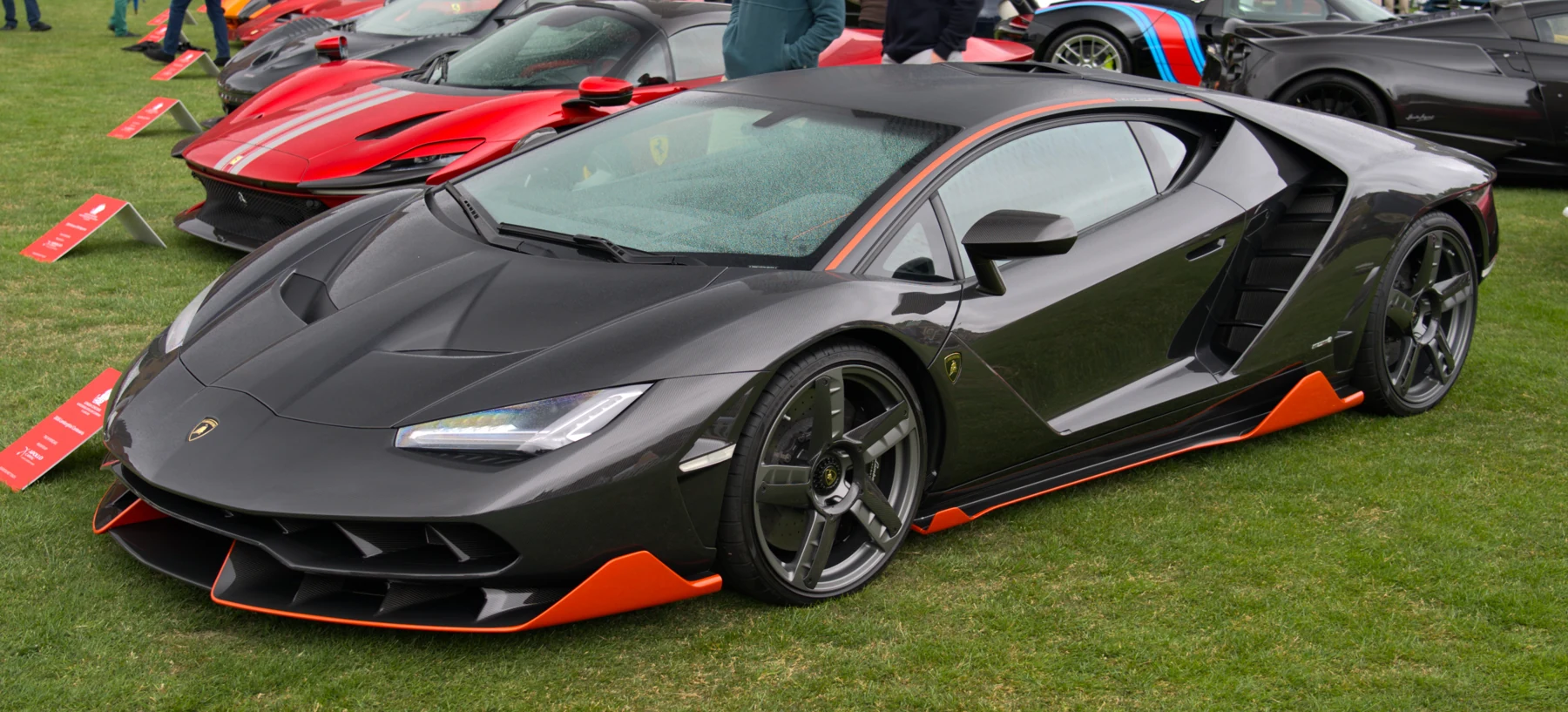
Lamborghini Centenario
Why 1.2: Forty cars, seven-figure entry and Lamborghini anniversary mythology make this more asset than instrument. It has the V12 hardware, but its natural habitat is a private collection.
Layout
Natural habitat
Ride comfort
Sound
The same 770 hp 6.5 V12 to 8,500 rpm, top-exit exhaust, nothing muffling it. It lands marginally below the SVJ because the tune is the softer of the two and the car was built to be looked at, which is largely where they stayed.
12-cylinder · naturally aspirated · 8,500 rpm redline · rated 9.2 / 10 for engine sound
Market value
Median asking price, good condition · €1.7M (2017) → €2.7M (2026), trending up · illustrative data
Child seats · ISOFIX
There aren't any — strict two-seater.
The only position there is, so makers of this era equip it: expect a passenger-airbag cut-off (key switch or occupant sensing) as standard, because there is no rear row to point children to. Whether the seat itself carries ISOFIX anchors is maker-specific — Porsche bundles them with its child-seat preparation, Ferrari sold them as an option, others are belt-mount only with the airbag off.
Derived from production years and seating layout, not a per-car source. ISOFIX was standardised as ISO 13216 in 1997, required on new EU model types from 2011 and on all new EU cars from 2014.
The long version
Mechanically the Centenario is an Aventador turned up and rebodied; commercially it is a numbered invitation to the Lamborghini inner circle. That second identity overwhelms the first. When production is counted in dozens and resale values sit in the millions, every mile feels like a decision the next buyer will audit. The V12 still deserves celebration, but the car's role is mostly ceremonial: unveiled, transported, photographed, stored. DougScore 70 gives the machinery credit; the index punishes the reality that almost nobody bought one to use up tires.