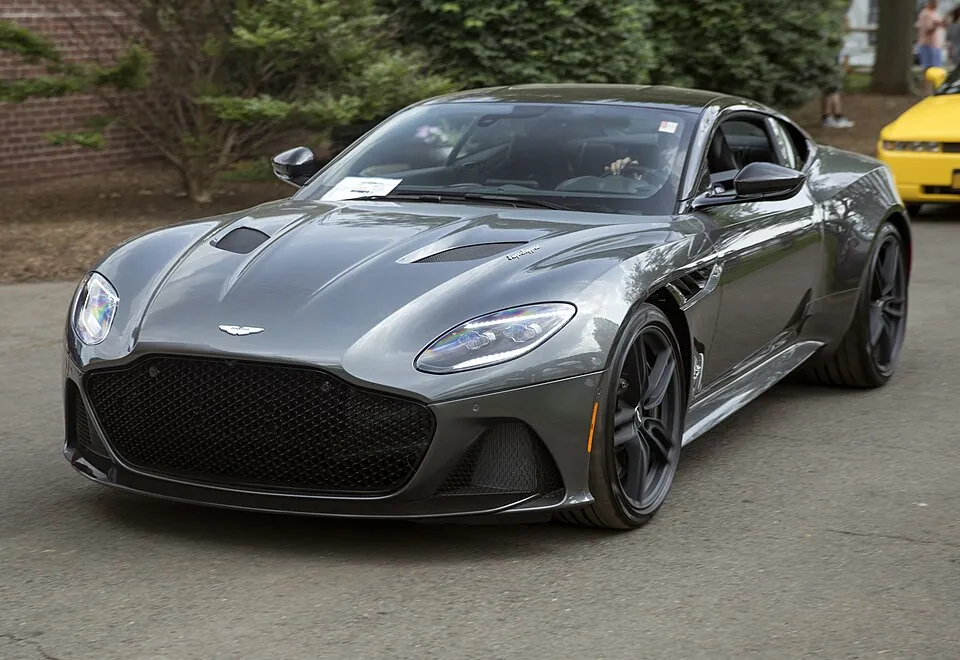
Aston Martin DBS Superleggera
Why 3.8: 715 twin-turbo horsepower and Aston's flagship carbon-composite body, sold almost entirely as a statement piece rather than a road-trip machine. No manual was ever offered, and the depreciation curve reads like every flagship Aston before it.
Layout
Natural habitat
Ride comfort
Sound
Twelve cylinders and a quad exhaust Aston tuned to bellow rather than murmur, which is more than most turbocharged GTs bother with. It is capped by 6,500 rpm and by turbochargers that swallow the top-end shriek an Aston V12 used to have.
12-cylinder · turbocharged · 6,500 rpm redline · rated 7.5 / 10 for engine sound
Market value
Median asking price, good condition · €283k (2019) → €202k (2026), trending down · illustrative data
Child seats · ISOFIX
Rear ISOFIX is fitted, but reviewers treat the +2 seats as occasional/booster-only space given how little room is left once the fronts are set.
Shares its passenger-airbag and seat hardware with the DB11 — the same TSB covers both — pointing to the same front ISOFIX plus key-operated PAD switch.
Autocar DBS Superleggera review; Aston Martin TSB RA-01-1327 (shared DB11/Vantage/DBS system) (owner-community sourced, not manufacturer documentation)
The long version
This is the heaviest, most powerful Vantage-family car Aston Martin builds, a genuine 200-mph grand tourer wrapped in the brand's most dramatic bodywork, and it depreciates like Astons always have: steeply, and mostly regardless of how good the driving experience underneath actually is. The ZF automatic is the only gearbox ever offered, ruling out the kind of manual-driven cult status that keeps some flagship GTs appreciating. Owners tend to use it for what the badge photographs well doing — valet arrivals, concours lawns, the occasional continental blast — more than for regular use, and resale numbers reflect exactly that pattern.