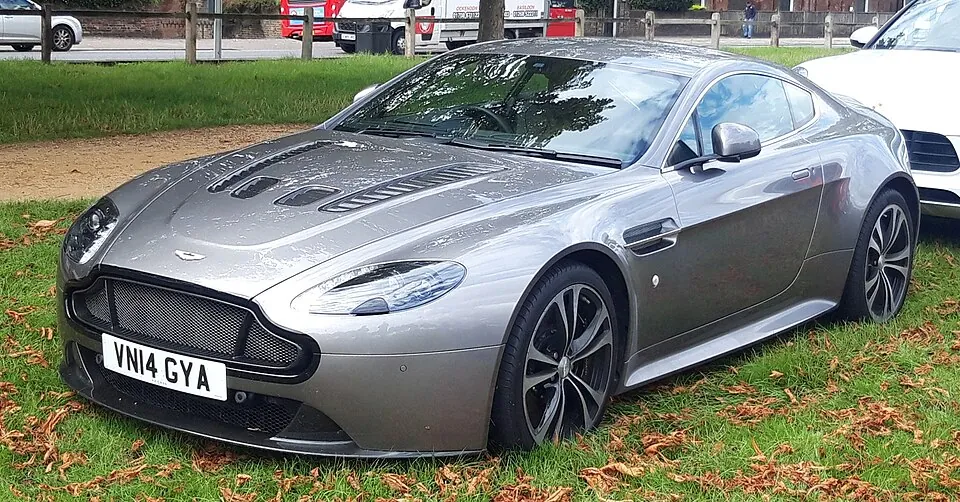
Aston Martin V12 Vantage S
Why 4.8: A 565 hp naturally aspirated V12 bolted to a single-clutch automated gearbox testers called jerky at launch, until Aston quietly added a proper 7-speed manual for 2016–17 and fixed the one real complaint. Values for the roughly 100 manual cars built have since pulled well away from the automated majority.
Layout
Natural habitat
Ride comfort
Sound
A 6.0-litre V12 forced into the smallest Aston body, with short pipes and very little between it and the cabin. But 7,000 rpm is modest for twelve cylinders, so it barks hard rather than climbing. Just below the high-revving naturally aspirated exotics.
12-cylinder · naturally aspirated · 7,000 rpm redline · rated 8.2 / 10 for engine sound
Market value
Median asking price, good condition · €171k (2014) → €106k (2026), trending down · illustrative data
Child seats · ISOFIX
There aren't any — strict two-seater.
First-generation Vantage carries front ISOFIX plus the same key-operated Passenger Airbag Deactivation switch used across the Aston range.
Aston Martin Vantage Owner's Handbook (first-generation VH platform) (owner-community sourced, not manufacturer documentation)
The long version
Most V12 Vantage S buyers got the Sportshift III single-clutch gearbox, competent but dated even when new, the same automated-manual compromise that capped involvement on plenty of cars from this era. Aston Martin's late correction, a proper dogleg 7-speed manual offered for just two model years, turned out to be the car enthusiasts actually wanted, and the used market has been re-sorting itself around that fact ever since. Manual cars now trade at a real premium over the automated majority, while ordinary Sportshift examples sit closer to where the whole model bottomed out a decade ago.