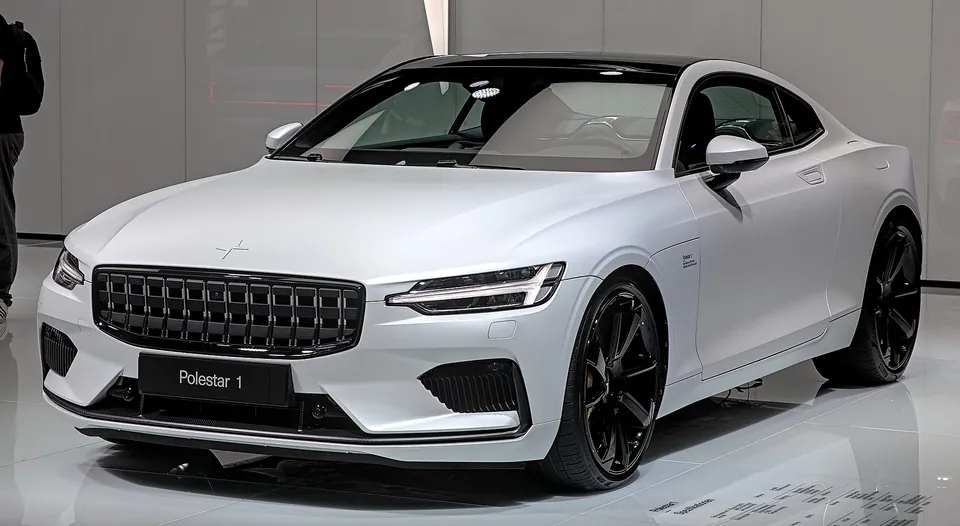
Polestar 1
Why 4.0: Carbon-fibre upper body, Ohlins electronically controlled dampers, 619 hp from a supercharged-and-turbocharged four plus three electric motors, and a 150 km electric range that was extraordinary for a 2019 plug-in hybrid. Fifteen hundred built across four years, and then Polestar became an electric-only brand and never made another one.
Layout
Natural habitat
Ride comfort
Sound
The twincharged 2.0 layers supercharger whine over turbo whoosh, and the four thrums harder than it does in any Volvo. But it is a 6,000 rpm four-cylinder in a two-tonne GT that runs silent half the time on battery. Among the also-rans here.
4-cylinder · turbocharged · 6,000 rpm redline · rated 3.5 / 10 for engine sound
Market value
Median asking price, good condition · €144k (2020) → €75k (2026), trending down · illustrative data
Child seats · ISOFIX
Two ISOFIX positions on the outer rear seats — jump seats, so the question is whether the seat physically fits behind a front occupant, not whether the anchors are there.
The rear anchors are the supported route — the manual points child seats there, and front-passenger ISOFIX is the exception rather than the rule. A belt-mounted seat up front needs the airbag off, and cars with a rear row don't always fit a deactivation switch, precisely because the rear seats exist.
Derived from production years and seating layout, not a per-car source. ISOFIX was standardised as ISO 13216 in 1997, required on new EU model types from 2011 and on all new EU cars from 2014.
The long version
The Polestar 1 was a statement of intent that the company immediately outgrew. It is a Volvo SPA platform shortened and stiffened, with a carbon-fibre-reinforced upper body that Polestar claimed took 230 kg out and added 45 per cent torsional rigidity, and a powertrain of genuine complexity: the twincharged four drives the front wheels through an eight-speed automatic, an integrated starter generator sits between them, and two separate electric motors drive the rear wheels individually through a planetary gearset that also does the torque vectoring. The Ohlins CESi dampers adjust electronically, which makes it the only Polestar so far where the suspension is not adjusted with a spanner. It also weighs 2,345 kg, cost $156,500, and was sold in numbers small enough that most of them went straight into collections. The ownership data reflects that — low annual mileage, a meaningful share resold inside two years — and the values bottomed around half of list before starting to firm up, which is what happens to a limited-run car nobody can order any more. The 150 km of electric range is the reason it is the only car in this batch that is genuinely happy in the Alps.