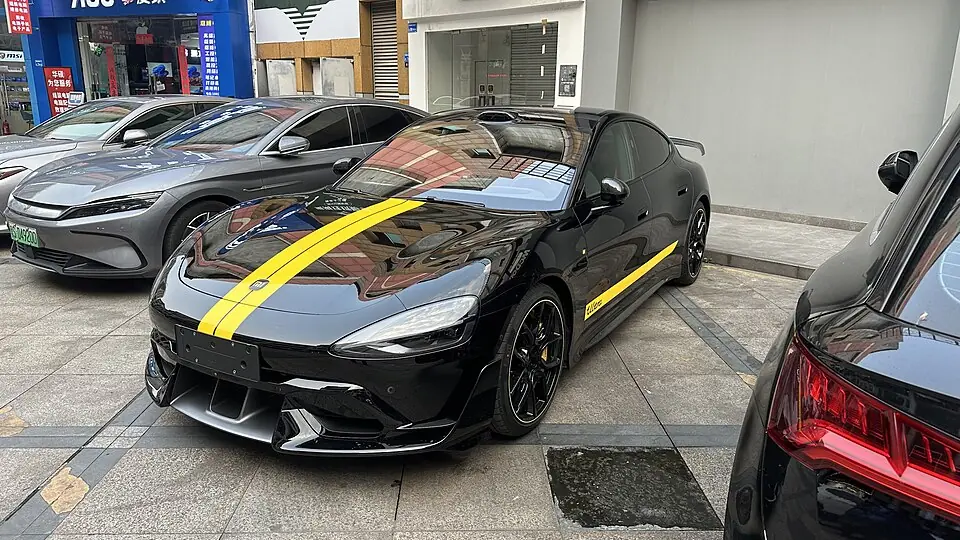
Xiaomi SU7 Ultra
Why 3.0: The prototype lapped the Nordschleife in the low 7:04s before the production Ultra even shipped, a genuine sedan record, not badge hype. What the lap time doesn't show is the resale pattern: allocation scarcity turned early builds into flip inventory before most owners logged real miles.
Layout
Natural habitat
Ride comfort
Sound
Xiaomi commissioned three powertrain sound profiles that track motor speed and torque, plus an external speaker, so real effort went in. But they impersonate a combustion engine that is not there, which is less honest than the Taycan's composed tone.
electric · rated 0.9 / 10 for engine sound
Market value
Median asking price, good condition · €87k (2024) → €70k (2026), trending down · illustrative data
Child seats · ISOFIX
Two ISOFIX positions on the outer rear seats, the outer pair being the ones the standard covers.
The rear anchors are the supported route — the manual points child seats there, and front-passenger ISOFIX is the exception rather than the rule. A belt-mounted seat up front needs the airbag off, and cars with a rear row don't always fit a deactivation switch, precisely because the rear seats exist.
Derived from production years and seating layout, not a per-car source. ISOFIX was standardised as ISO 13216 in 1997, required on new EU model types from 2011 and on all new EU cars from 2014.
The long version
Xiaomi entered the car business in 2024 and went straight for a Nürburgring record with the SU7 Ultra's prototype, a stunt that bought more legitimate credibility than most first-time automakers earn in a decade. Domestic demand for the production version outstripped supply immediately, and resale listings for early allocation slots appeared before delivery dates did — a flip pattern that says more about the ownership reality than the lap time does. It was never federalized for US sale and likely never will be, which keeps the import-market conversation entirely theoretical for now, however fast the real cars are.