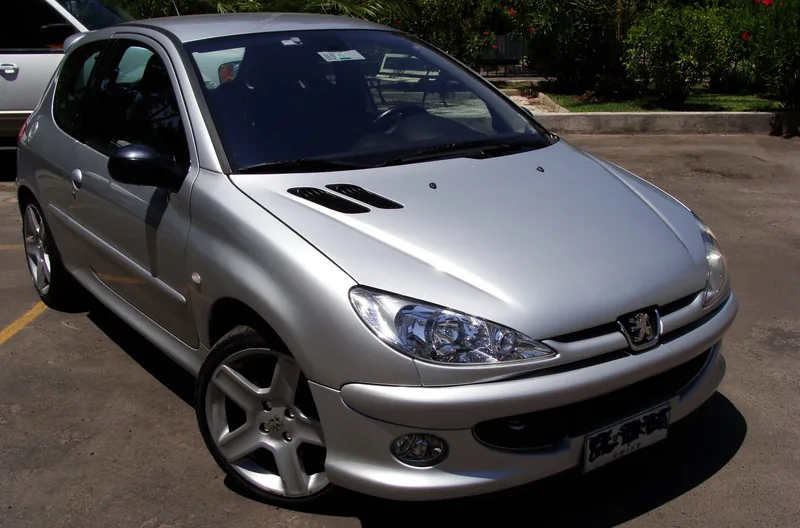
Peugeot 206 RC
Why 7.1: A small, revvy European hot hatch with real road use, low purchase price and a cult following outside the US.
Layout
Natural habitat
Ride comfort
Sound
The 2.0 EW10J4S finds a hard edge at the top and pulls to 7,000, which is more than most hot hatches of its era offered. But the exhaust is standard Peugeot, the note is thin below 4,000, and nothing about it is distinctive. Competent and forgettable.
4-cylinder · naturally aspirated · 7,000 rpm redline · rated 5.3 / 10 for engine sound
Market value
Median asking price, good condition · €22k (2004) → €17k (2026), trending down · illustrative data
Child seats · ISOFIX
The same manual specifically calls out the 206 RC by name: it gets ISOFIX on only "one-third" of the rear bench, versus both outer positions on the saloon/SW.
Peugeot's own Guide de l'Automobiliste states the front passenger seat carries ISOFIX anchoring points across the 206 range, and Euro NCAP separately documents the ignition-key airbag cut-off needed to use it.
RC's rear ISOFIX covers a single bench position, not the usual two outboard seats — worth flagging before anyone plans to fit two child seats in the back.
Peugeot 206 Guide de l'Automobiliste (owner's manual); Euro NCAP Peugeot 206 (2000) assessment
The long version
The 206 RC is not the 205 GTI reborn, but it is the 206 generation at its most serious: naturally aspirated two-litre, close-ratio manual, compact footprint and just enough French looseness to stay interesting. Values have moved from cheap-thrash territory into cared-for modern-classic territory, but they are not too precious yet. It earns its page because Europe has a whole layer of driver cars that American DougScore coverage barely touches.