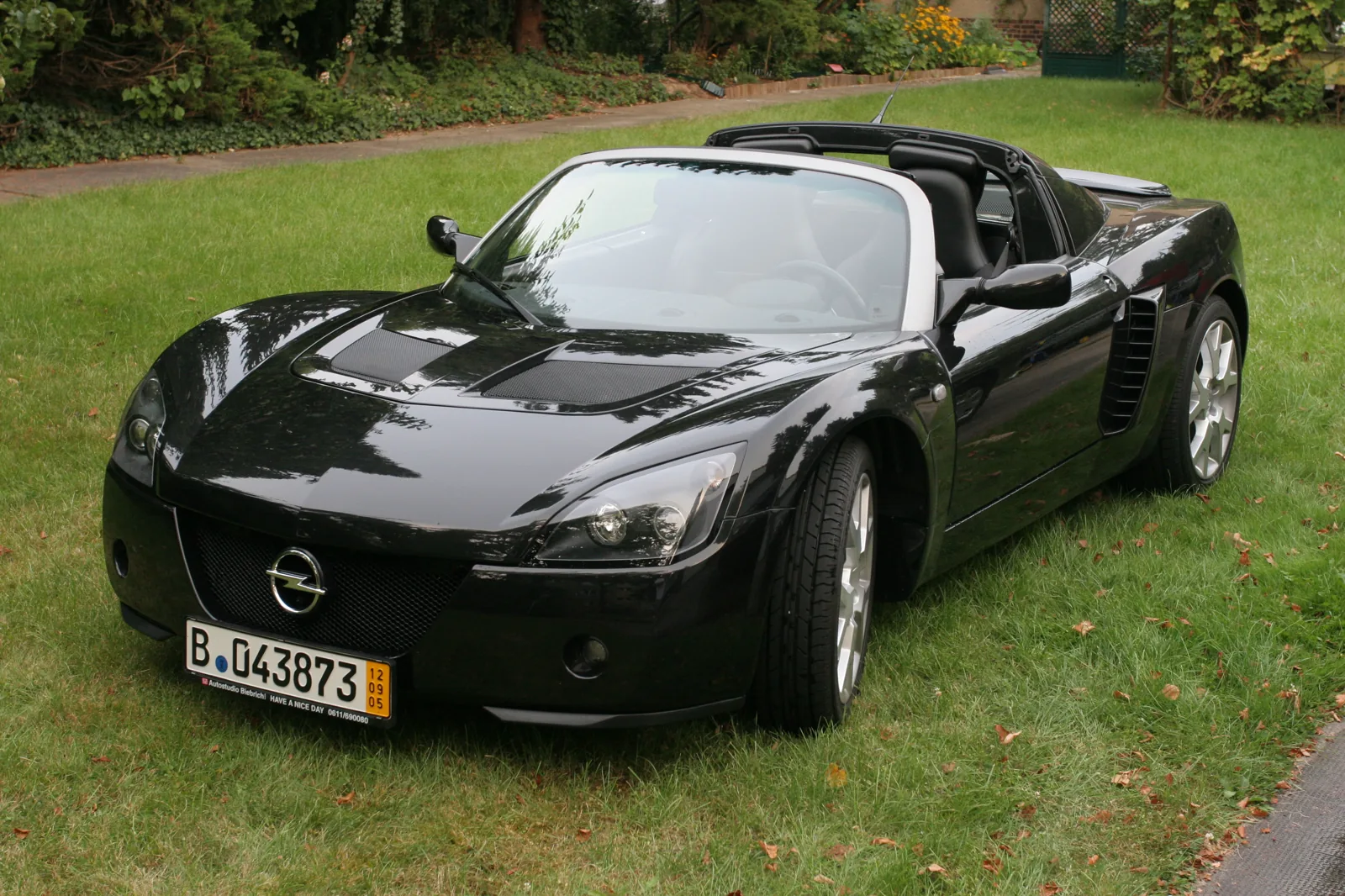
Vauxhall VX220
Why 6.0: Built on Elise architecture, lighter than almost anything modern and never sold in the US. Values rose, but not enough to stop owners using them as raw weekend tools.
Layout
Natural habitat
Ride comfort
Sound
Mid-mounted with almost no insulation, so induction and mechanical noise come through clearly. The trouble is that it is a Vectra's 2.2 Ecotec — flat, industrial and finished at 6,500. The chassis is why people buy one; the engine is what they replace first.
4-cylinder · naturally aspirated · 6,500 rpm redline · rated 5.1 / 10 for engine sound
Market value
Median asking price, good condition · €29k (2001) → €33k (2026), trending up · illustrative data
Child seats · ISOFIX
There aren't any — strict two-seater.
No anchors, and on most of these no passenger airbag either — the car is too stripped for the question to arise. Whatever goes in that seat goes in on a harness or a belt.
Derived from production years and seating layout, not a per-car source. ISOFIX was standardised as ISO 13216 in 1997, required on new EU model types from 2011 and on all new EU cars from 2014.
The long version
The VX220 is the strange GM-badged cousin of the Elise: aluminium tub, mid-engine layout, no comfort pretense and a badge that keeps prices just far enough below Lotus money to make driving one feel less financially precious. It was sold as a Vauxhall or Opel, never officially in America, and that obscurity helps. Owners tend to be people who deliberately sought the oddball rather than people chasing a collectible badge. It earns Forbidden Fruit and Smiles per Dollar by being exactly what modern lightweight cars keep promising to be: simple, stiff, communicative and cheap enough to risk on a wet B-road.