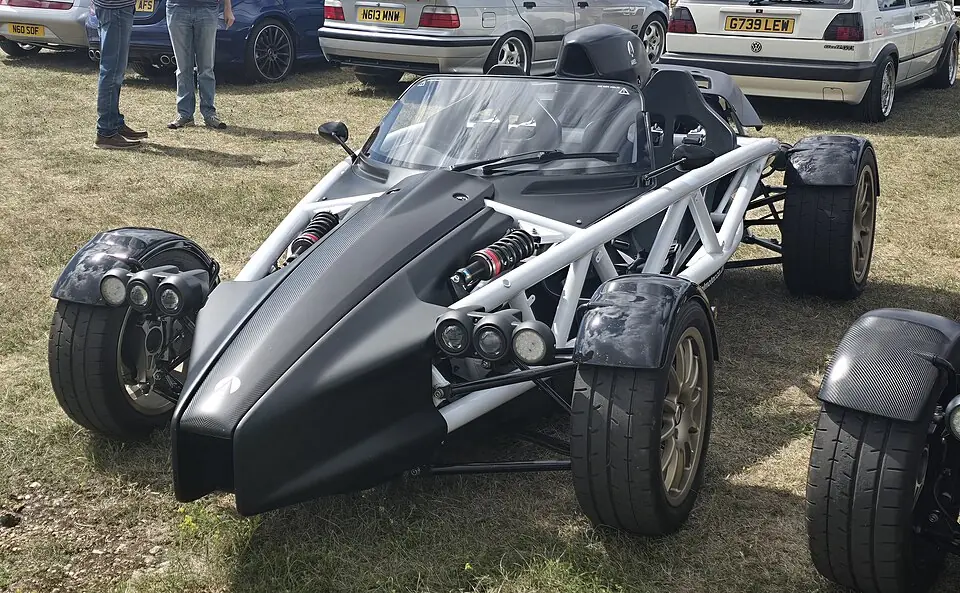
Ariel Atom
Why 6.8: An exoskeleton and an engine; wearing a helmet is the dress code. Almost every one lives at a circuit — the only reason it trails the Seven is you genuinely can't run errands in it.
Layout
Natural habitat
Ride comfort
Sound
With the engine hung in an open frame, the Civic Type R's K20C whoops, chirps and flutters through its wastegate with nothing at all between it and your helmet. But it is a boosted two-litre stopping at 7,000, so this is induction and turbo theatre, not an engine note.
4-cylinder · turbocharged · 7,000 rpm redline · rated 7.4 / 10 for engine sound
Market value
Median asking price, good condition · €53k (2015) → €63k (2026), trending up · illustrative data
Child seats · ISOFIX
There aren't any — strict two-seater.
No anchors, and on most of these no passenger airbag either — the car is too stripped for the question to arise. Whatever goes in that seat goes in on a harness or a belt.
Derived from production years and seating layout, not a per-car source. ISOFIX was standardised as ISO 13216 in 1997, required on new EU model types from 2011 and on all new EU cars from 2014.
The long version
Nobody's daily commute includes a roll cage and no doors, so this arrives in a garage as the third or fourth car, the one reserved for a clear morning and a track day, never the one that does the grocery run. That narrows the mileage relative to something like the Seven, but it also means almost every logged mile is deliberate and enthusiastic rather than a commute nobody chose. Values have climbed in a slow, steady line since 2015 rather than spiking, fitting a market of buyers who want to drive it, not trade it. Track Rat is less a badge than a description of the whole reason it exists.