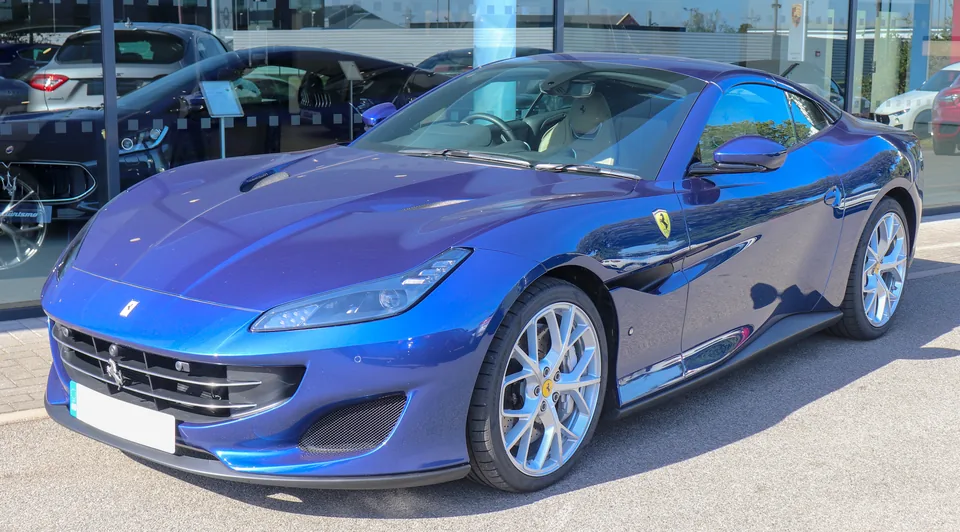
Ferrari Portofino
Why 6.0: 80kg lighter and 35% stiffer than the California T it replaced, with roughly 40 more horsepower — Ferrari's engineers answered nearly every complaint about the car purists loved to dismiss. The ownership pattern didn't change much: this is still the entry Ferrari GT convertible bought to be driven to dinner, not tracked.
Layout
Natural habitat
Ride comfort
Sound
The flat-plane crank gives Ferrari's 3.9-litre turbo V8 a harder, higher edge than any German rival manages, and it still wails towards 7,500 rpm. But the turbos and a folding-roof GT brief mute it — pleasant, and a long way from the naturally aspirated 458.
8-cylinder · turbocharged · 7,500 rpm redline · rated 6.6 / 10 for engine sound
Market value
Median asking price, good condition · €198k (2018) → €179k (2026), trending down · illustrative data
Child seats · ISOFIX
Genuine Ferrari ISOFIX cover/spacer/bracket parts exist for the Portofino's rear seats and reviews confirm two rear ISOFIX points with top tethers, though roofline and headroom make an actual child seat impractical back there.
Same Ferrari-wide restriction — the front passenger seat isn't approved for universal ISOFIX.
Ferrari parts catalog (p/n 767797 RH ISOFIX cover, 82450900 ISOFIX spacer, Portofino); CarExpert/Top Gear reviews (owner-community sourced, not manufacturer documentation)
The long version
The Portofino inherited the California T's mission — a folding-hardtop, front-engine Ferrari built for buyers who wanted the badge and the comfort more than the bloodline argument — and then went and fixed the specific things testers complained about: a new aluminum architecture cut 80kg and added real structural rigidity, and the twin-turbo V8 picked up power along the way. None of that erased the stigma among Ferrari purists who still treat any front-engine, turbocharged, folding-roof Ferrari as the least serious car with the badge. It also didn't need to: Portofino buyers were never cross-shopping a 488. Depreciation followed a familiar entry-Ferrari curve — a dip through the early 2020s, values firming back up since — the fate of a car that gets driven enough to rack up real mileage rather than get mothballed for a future auction.