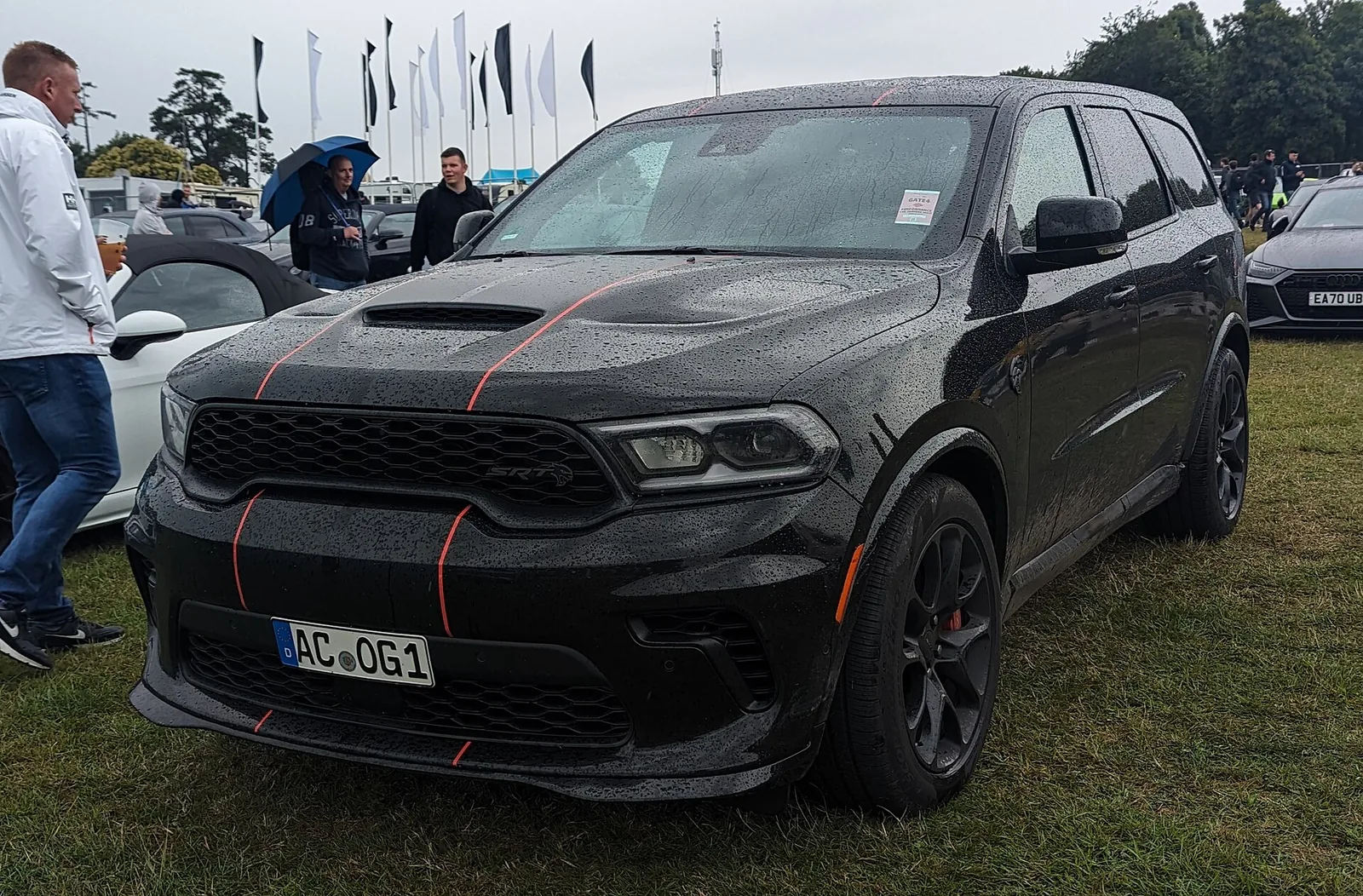
Dodge Durango Hellcat
Why 5.8: DougScore 67 and an obviously stupid premise. It gets points because the stupidity is usable: family-hauler shape, supercharged-V8 behavior.
Layout
Natural habitat
Ride comfort
Sound
The 6.2 supercharged V8 lays blower whine over a quad-tip exhaust that is allowed to bark, in a car with three rows of seats. But 6,200 rpm ends it early and there is no bonnet scoop feeding induction noise in. Just behind the pickup that shares the engine.
8-cylinder · supercharged · 6,200 rpm redline · rated 6.9 / 10 for engine sound
Market value
Median asking price, good condition · €75k (2021) → €72k (2026), trending down · illustrative data
Child seats · ISOFIX
2nd-row outboard LATCH anchors and top tethers standard, same WD-platform hardware as any Durango.
No LATCH hardware up front.
Durango is normally a 3-row SUV, but the SRT Hellcat trim drops the 3rd row as standard — this is a genuine 2-row, 5-seat car, not a simplification.
FMVSS 225 (US federal LATCH mandate, lower anchors + top tether required from Sept 2002) (owner-community sourced, not manufacturer documentation)
The long version
The Durango Hellcat is ridiculous in a way that survives contact with normal life. It can haul children, luggage and groceries while making the same supercharger shriek that turns Chargers into YouTube thumbnails. That usability means owners can actually drive them, even if some first-year scarcity created collector noise. It is not a precision tool, but it is a very clear ownership story: someone wanted the bad idea and needed three rows.