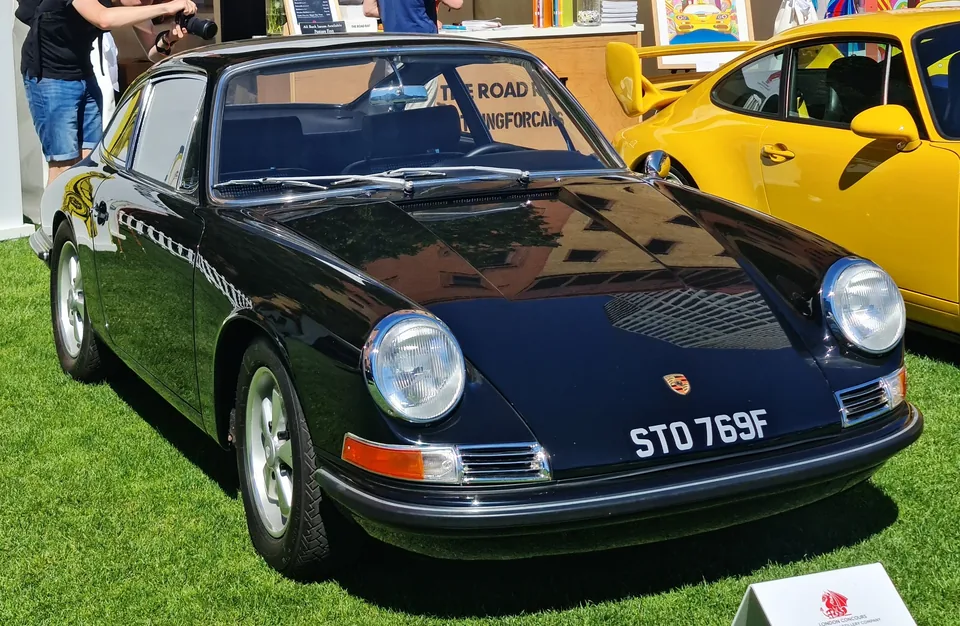
Porsche 911 S
Why 4.5: The S arrived for 1967 with 160 hp from the 2.0, forged Fuchs wheels, Koni dampers and ventilated discs, and grew through the 2.2 of 1970 to the 2.4 of 1972–73 with 190 hp on Bosch mechanical injection. It is the performance 911 of the long-bonnet era, the car the 2.7 RS was built from, and the one most backdates are trying to look like.
Layout
Natural habitat
Ride comfort
Sound
Bosch mechanical injection, a 7,300 rpm redline and the same crank fan as every air-cooled 911, so the 2.4 S has the RS's hard metallic climb and the MFI clatter at idle. It gives up a little to the RS because 2.4 litres carries less volume up top and the standard car keeps its deadening. Well clear of the carburetted 2.0.
6-cylinder · naturally aspirated · 7,300 rpm redline · rated 8.4 / 10 for engine sound
Market value
Median asking price, good condition · €9k (1973) → €207k (2026), trending up · illustrative data
Child seats · ISOFIX
Built before ISOFIX existed, so there are no anchor points at all. A child seat here is a seatbelt installation, and the belt geometry of the period was not designed with one in mind.
Derived from production years and seating layout, not a per-car source. ISOFIX was standardised as ISO 13216 in 1997, required on new EU model types from 2011 and on all new EU cars from 2014.
The long version
Genuine S cars are rare enough — Porsche built a few thousand a year across six model years — that the market treats them as collectables first and sports cars second. A real 2.4 S coupé trades around the price of a new Turbo S, a numbers-matching 2.0 S not far behind, and the premium over a T of the same year is so large that the long-bonnet world is full of cars wearing S badges that left Zuffenhausen as something else. That gap is why ownership looks the way it does. Verified cars get mileage on tours and club rallies where provenance is part of the entry, and they come up at auction more often than the base 2.0 because the money is bigger and the fakes make buyers nervous about anything that is not fully documented. The owners who drive them, drive them hard; the rest are curated. Falls below the base car on both ownership factors for exactly that reason.