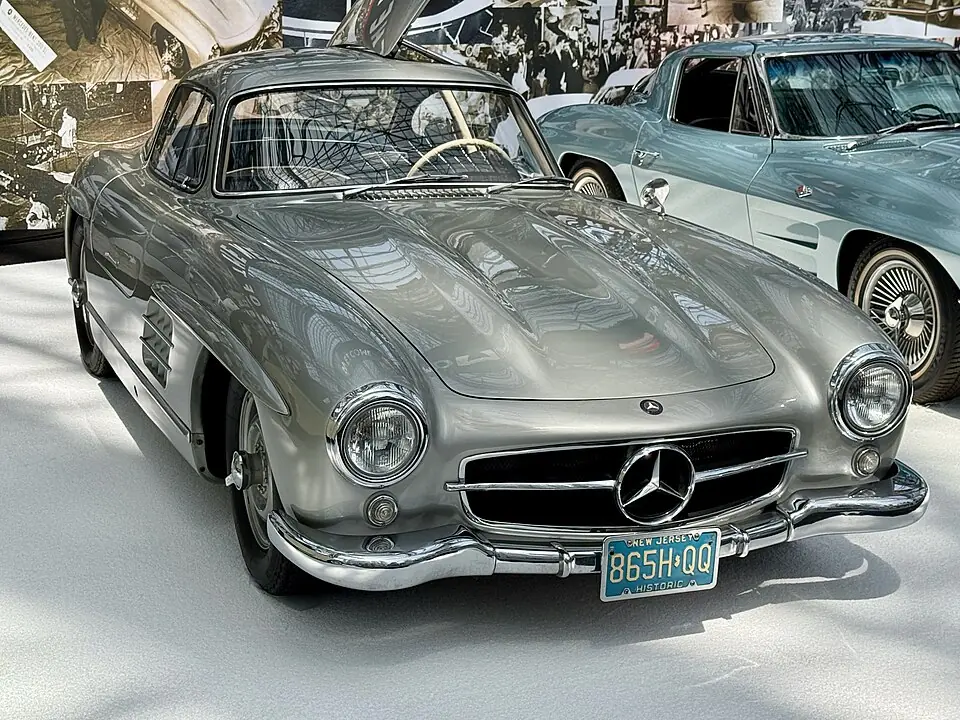
Mercedes-Benz 300SL Gullwing
Why 3.5: Mechanical fuel injection, unassisted steering and doors nobody's forgotten — genuinely one of the great pre-modern drivers' cars, docked only for the swing-axle rear that period testers warned could snap at the limit. Seven-figure values now keep almost every survivor on a lift, not a road.
Layout
Natural habitat
Ride comfort
Sound
The 3.0 straight-six runs Bosch mechanical direct injection, and the pump whir over a hard, dry rasp gives it a sound no other fifties road car has. It is capped by 5,800 rpm and 215 hp, so the note never builds far. Distinctive rather than dramatic.
6-cylinder · naturally aspirated · 5,800 rpm redline · rated 7.3 / 10 for engine sound
Market value
Median asking price, good condition · €322k (2000) → €1.3M (2026), trending up · illustrative data
Child seats · ISOFIX
Built before ISOFIX existed, so there are no anchor points at all. A child seat here is a seatbelt installation in the only passenger seat there is.
Derived from production years and seating layout, not a per-car source. ISOFIX was standardised as ISO 13216 in 1997, required on new EU model types from 2011 and on all new EU cars from 2014.
The long version
The buyer pool is museums, blue-chip collections and a shrinking number of families who never sold grandfather's car — at seven figures, entry is by wire transfer, not enthusiasm. What driving happens is ceremonial: concours lawns, the occasional Mille Miglia retrospective, a climate-controlled trailer both ways. The mechanical fuel injection that made it a legend is now a specialist-only service item, which suits owners who measure use in appearances per year. It wears Garage Queen with historical justification — most survivors have been trophies longer than they were ever transportation.