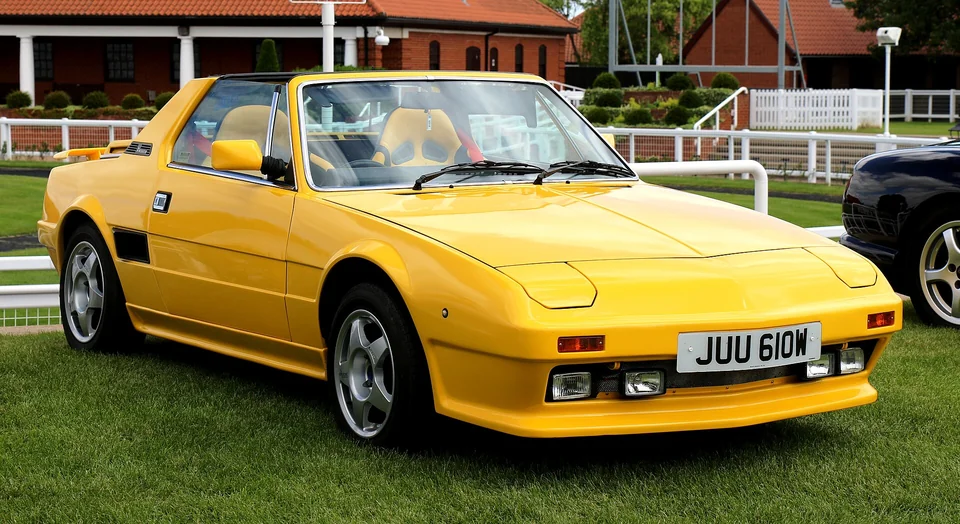
Fiat X1/9
Why 7.6: Gandini drew a wedge for Bertone, Fiat turned the 128's front-drive powertrain around and put it behind the seats, and the result was a genuine mid-engined targa costing about what a family saloon did. Around 160,000 were built and America took a very large share, so this is one of the few cars in this batch that is not import-only.
Layout
Natural habitat
Ride comfort
Sound
The 128-derived SOHC four sits behind your shoulders with the targa panel stowed, so the Weber's induction and the gearbox are as loud as the exhaust. But it is an economy engine at heart, buzzy and flat by 6,000 rpm, so placement is doing the work.
4-cylinder · naturally aspirated · 6,000 rpm redline · rated 5.2 / 10 for engine sound
Market value
Median asking price, good condition · €5k (1975) → €15k (2026), trending up · illustrative data
Child seats · ISOFIX
Built before ISOFIX existed, so there are no anchor points at all. A child seat here is a seatbelt installation in the only passenger seat there is.
Derived from production years and seating layout, not a per-car source. ISOFIX was standardised as ISO 13216 in 1997, required on new EU model types from 2011 and on all new EU cars from 2014.
The long version
The X1/9 is a Bertone show car that reached production almost unaltered — Marcello Gandini's wedge, pop-up lamps, and a lift-out roof panel that stows in the front boot. Mechanically it is a Fiat 128 with its transverse front-drive powertrain rotated and relocated behind the seats, which is what kept it cheap enough that mid-engined handling stopped being an exotic idea; the 1.3 made 75 PS and the later 1.5 made 85, so nobody ever bought one for straight-line speed. What it does is corner, on tyres narrow enough that the limits arrive at sane road speeds instead of licence-ending ones. Roughly 140,500 came from Fiat and another 19,500 from Bertone after Fiat handed the whole car over in 1982, and the United States was the single biggest market — imports continued there until 1989, years after Fiat itself had withdrawn from America. Rust killed the majority. What is left is cheap enough that people drive it and expensive enough to restore that nobody is doing it speculatively, which is close to the ideal ownership profile as far as this index is concerned.