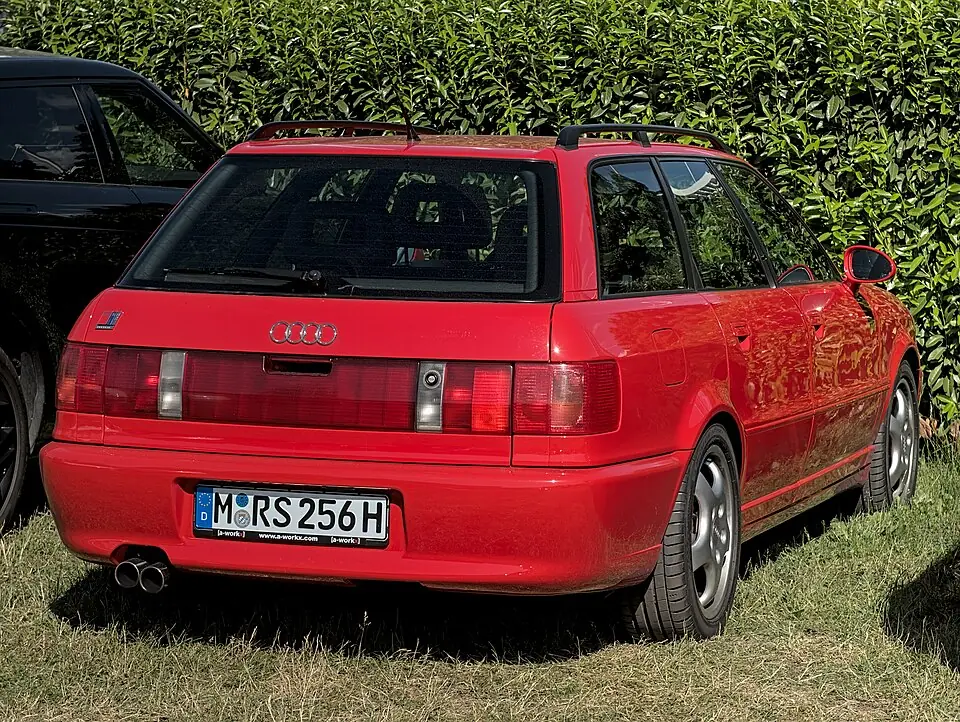
Audi RS2 Avant
Why 4.8: Porsche brakes, Porsche mirrors, a five-cylinder yowl, and the entire fast-wagon genre downstream of it. Collector gravity is winning — 2,891 built and the driven share shrinks yearly.
Layout
Natural habitat
Ride comfort
Sound
The 2.2 five's odd firing order gives the off-beat warble no four or six produces, and it is identifiable instantly. But a single large turbo and Audi's estate-car silencing smother most of it, and it was never a loud car. Distinctive, not dramatic.
5-cylinder · turbocharged · 7,000 rpm redline · rated 6.7 / 10 for engine sound
Market value
Median asking price, good condition · €23k (2000) → €101k (2026), trending up · illustrative data
Child seats · ISOFIX
Built before ISOFIX existed, so there are no anchor points at all. A child seat here is a seatbelt installation, and the belt geometry of the period was not designed with one in mind.
Derived from production years and seating layout, not a per-car source. ISOFIX was standardised as ISO 13216 in 1997, required on new EU model types from 2011 and on all new EU cars from 2014.
The long version
It never came to America new, so every RS2 here arrived through the 25-year import loophole, usually bought by someone who had wanted one since reading about it in a magazine decades earlier — a fandom with a two-decade waiting list built in. That patience does not always translate into miles once the car lands; a fair number get treated as the trophy the wait earned rather than the wagon Audi built to be used hard. The ones still doing school runs and grocery trips are increasingly the exception, not the rule the badge is starting to describe.