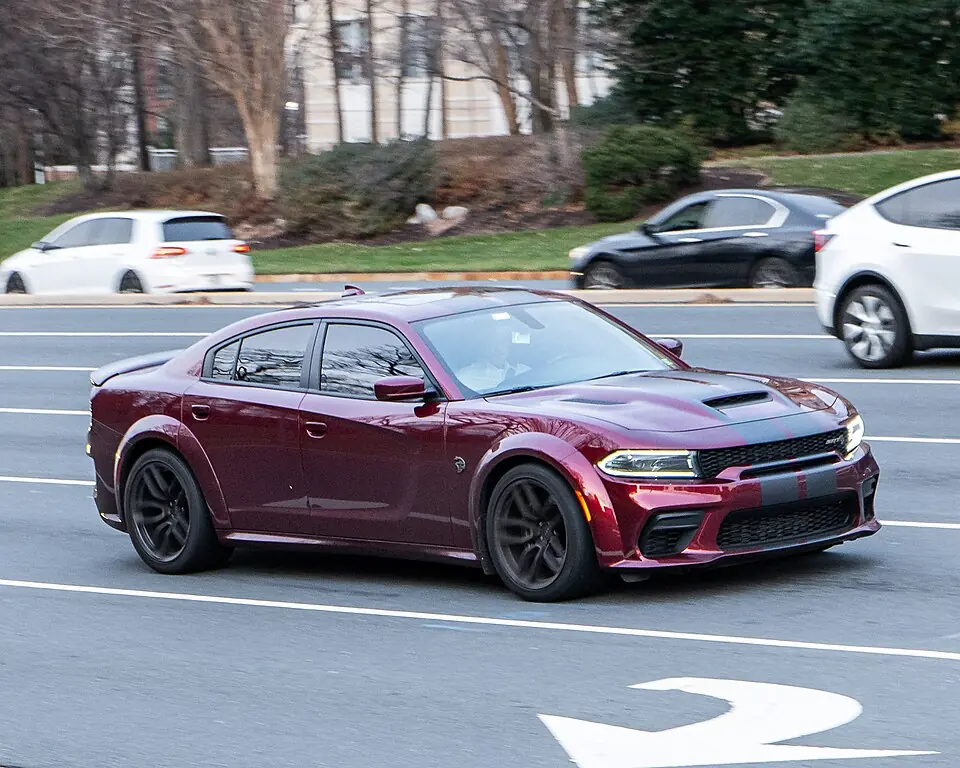
Dodge Charger Hellcat
Why 5.3: America's blower-whine icon, bought for the noise and the numbers and driven mostly in a straight line. The rental-fleet and social-media ownership pattern keeps it low; the honesty of the thing keeps it off the floor.
Layout
Natural habitat
Ride comfort
Sound
The twin-screw supercharger shrieks over the 6.2 Hemi loudly enough to identify the car from a street away, which nothing else does. But it is a pushrod V8 finished at 6,200 rpm and the blower does most of the work. Theatre, just under the F-Type.
8-cylinder · supercharged · 6,200 rpm redline · rated 7.1 / 10 for engine sound
Market value
Median asking price, good condition · €63k (2016) → €60k (2026), trending down · illustrative data
Child seats · ISOFIX
LX-platform rear bench: LATCH lower anchors at both outboard positions, top tether at all three, same hardware the Charger's used since its 2011 refresh.
No LATCH hardware up front; Dodge's manual points to the rear bench.
FMVSS 225 (US federal LATCH mandate, lower anchors + top tether required from Sept 2002) (owner-community sourced, not manufacturer documentation)
The long version
A meaningful slice of the Hellcat population has spent time as a rental-counter upgrade or a dealer demo before landing with a private owner, which does a number on both the odometer and the reputation — supercharged whine as a thrill ride you pay a daily rate for. The private-owner cars fare better but still cluster around burnout videos and quarter-mile numbers more than road courses, because the chassis underneath was never really the point of the purchase. It sits low on the index not because it is undriven, but because most of the driving is the same 200 feet, repeated.