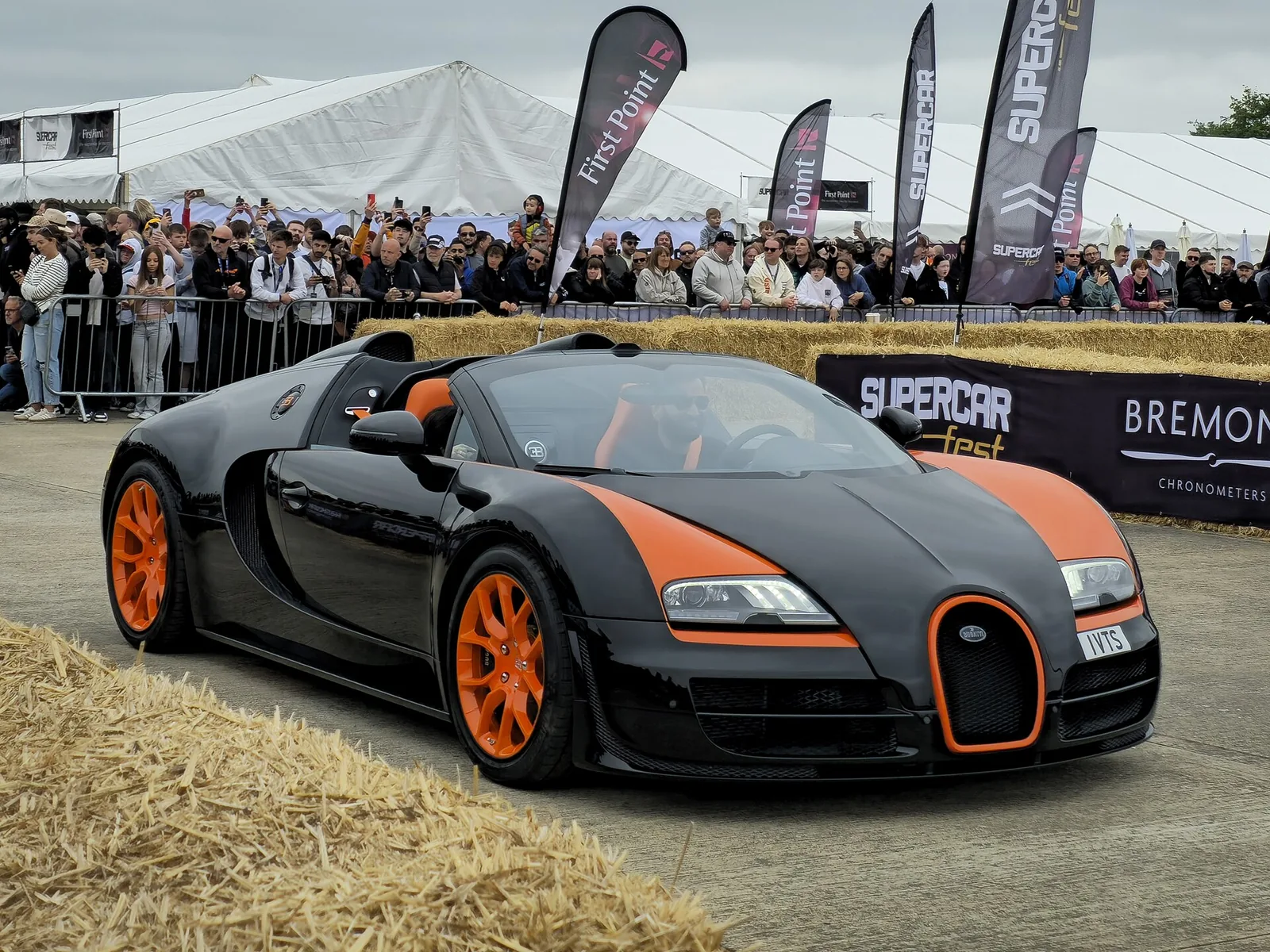
Bugatti Veyron Grand Sport Vitesse
Why 1.9: DougScore 68 and objectively outrageous, but the Vitesse is now blue-chip art with tires. Mileage is the enemy of value.
Layout
Natural habitat
Ride comfort
Sound
With the roof panel out, the intakes sit right behind your head and the W16 arrives as a hard mechanical roar. But four turbochargers strangle everything above that induction noise, and 6,500 rpm leaves nothing to climb through. Impressive, not musical.
16-cylinder · turbocharged · 6,500 rpm redline · rated 6.0 / 10 for engine sound
Market value
Median asking price, good condition · €2.1M (2013) → €3M (2026), trending up · illustrative data
Child seats · ISOFIX
There aren't any — strict two-seater.
The only position there is, so makers of this era equip it: expect a passenger-airbag cut-off (key switch or occupant sensing) as standard, because there is no rear row to point children to. Whether the seat itself carries ISOFIX anchors is maker-specific — Porsche bundles them with its child-seat preparation, Ferrari sold them as an option, others are belt-mount only with the airbag off.
Derived from production years and seating layout, not a per-car source. ISOFIX was standardised as ISO 13216 in 1997, required on new EU model types from 2011 and on all new EU cars from 2014.
The long version
The Vitesse is peak Veyron collector logic: more power, open roof, fewer cars and a world-record story. That makes it more exciting on paper and less likely to be used like a machine. The hardware remains absurdly capable, and Doug's weekend score reflects the occasion, but ownership reality is climate control, battery tenders and carefully planned public appearances. It is a necessary page because the Veyron story is incomplete without the version that turned excess into a collectible subseries.