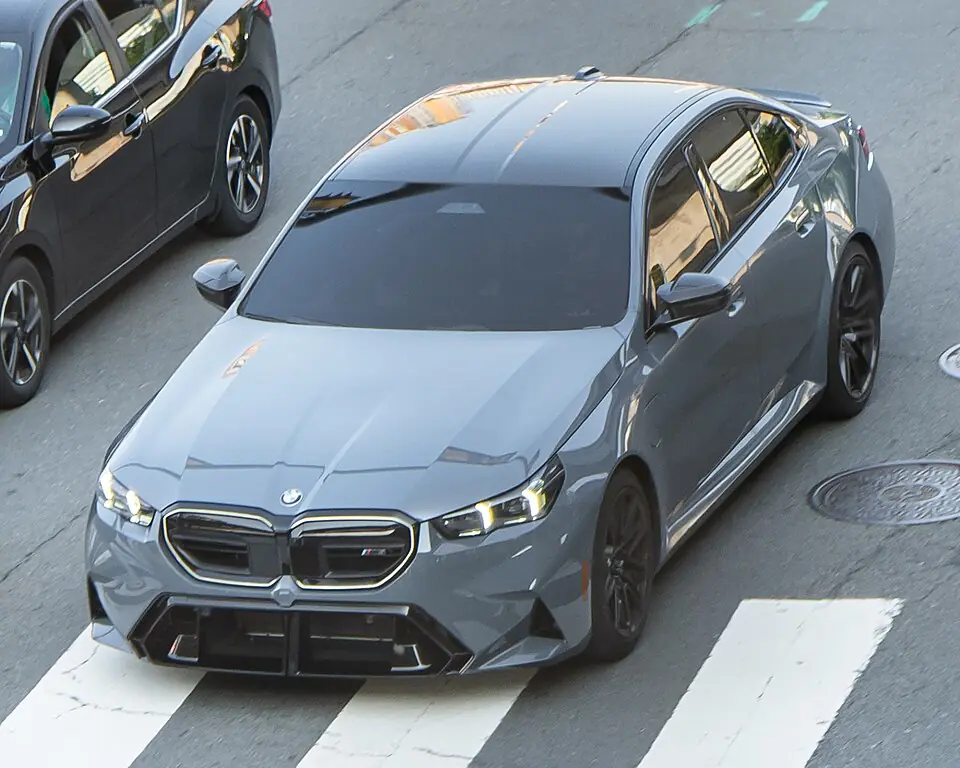
BMW M5 (G90)
Why 6.3: Every launch road test flagged the same thing: over 2,400 kg of M5, the heaviest one BMW has built, and the hybrid battery is most of why. The power number keeps climbing every generation; whether the driving experience keeps pace is the argument this generation reopened.
Layout
Natural habitat
Ride comfort
Sound
The S68 V8 is real and the hybrid system is not the problem. But BMW routes most of what you hear through the cabin speakers, and outside the car the standard exhaust barely registers — augmentation this heavy on a good engine is the worst of both.
8-cylinder · turbocharged · 7,200 rpm redline · rated 3.0 / 10 for engine sound
Market value
Median asking price, good condition · €110k (2025) → €103k (2026), trending down · illustrative data
Child seats · ISOFIX
Two outer rear ISOFIX positions with top tether expected, mirroring the outgoing F90 M5's confirmed layout; middle belt-only.
No front-passenger ISOFIX — BMW hasn't reintroduced this on any G-series car, and the G90 continues the F90's approach.
Newest car in this set — no independent compatibility document located yet; based on direct continuity from F90.
Extrapolated from BMW M5 (F90) official Suitable Seats document (predecessor platform); no G90-specific document located yet (owner-community sourced, not manufacturer documentation)
The long version
BMW added a plug-in hybrid system to the M5 for the G90 generation, chasing a combined 717 horsepower figure no previous M5 came close to touching. The added battery pack pushed curb weight well past the F90's, heavier than any M5 before it, and launch reviews split on whether the extra shove is worth what the added mass costs the chassis in feel. Early buyers skew toward the same do-everything-with-one-car crowd every M5 generation has attracted, but it is too soon to know if this one gets driven like its predecessors or garaged while the weight argument gets settled by owners instead of magazines.